Category: Uncategorized

  • Navigating the AI Revolution: Are We Ready for the Shifting Sands of Work?

    Navigating the AI Revolution: Are We Ready for the Shifting Sands of Work?

    The relentless march of artificial intelligence continues to reshape the fabric of our daily lives, promising unparalleled efficiency and innovation. Yet, beneath the gleaming surface of this technological marvel lies a complex shadow – a “dark side” that compels us to confront uncomfortable questions about the future we are actively building. As algorithms become more sophisticated and machine learning capabilities expand exponentially, concerns mount regarding the profound societal and economic dislocations that may lie ahead, particularly within the global workforce. This isn’t merely a hypothetical future; it is a transition already underway, demanding our urgent attention and proactive adaptation.

    One of the most immediate and palpable anxieties centers on job displacement. Experts widely acknowledge that roles characterized by repetitive tasks or predictable processes, spanning sectors from administrative support and clerical work to entry-level finance and even elements of law and consulting, face significant vulnerability. Projections suggest a substantial portion of these positions could be automated, potentially leading to a notable increase in unemployment figures. For younger generations entering the workforce, this presents a unique challenge – an “experience gap” where traditional entry points are dissolving before alternative pathways are fully established. The speed at which this transformation is occurring leaves little room for complacency; the time to prepare and adapt is now.

    Driving this rapid shift is a pervasive corporate strategy increasingly prioritizing automation. Many businesses are adopting an “AI-first” mindset, viewing intelligent systems not just as tools but as fundamental pillars for operational efficiency and cost reduction. This trend is visible across diverse industries, from manufacturing floors leveraging robotic automation to service sectors deploying AI-powered customer support. While the pursuit of efficiency is a core tenet of business, the widespread adoption of automation as a primary goal raises critical questions about corporate responsibility and the potential trade-offs between profitability and human employment. As one perspective highlights:

    “The push towards automation, while understandable from a bottom-line perspective, necessitates a parallel commitment to mitigating the human cost and ensuring a just transition for affected workers.”

    Beyond the immediate threat of job loss, the AI revolution introduces broader economic and psychological challenges. The potential for widening income inequality is stark, as those with skills complementary to AI may thrive while those in automatable roles struggle. This disparity could exacerbate existing social divides. Furthermore, the psychological toll of job insecurity, the need for constant reskilling, and the pressure to remain relevant in a rapidly evolving landscape can contribute to increased stress and anxiety levels across the population. Building individual and collective resilience, alongside robust social safety nets, becomes paramount in navigating these turbulent waters.

    Successfully navigating this period of intense disruption requires a multi-faceted approach centered on proactive adaptation and strategic investment in human capital. The concept of reskilling and upskilling is not merely a buzzword but a critical necessity. The World Economic Forum, among other bodies, emphasizes the vital role of education in bridging the gap between obsolete skills and the demands of the future economy. This involves not just technical training but also fostering uniquely human capabilities that AI cannot replicate, such as critical thinking, creativity, emotional intelligence, and complex problem-solving. Emerging industries and roles will require a different set of competencies, and societies must prioritize equipping their citizens with the tools to thrive in these new frontiers. This transition demands collaboration between governments, educational institutions, and the private sector to create accessible and effective pathways for lifelong learning.

    In conclusion, the rise of AI presents a double-edged sword – immense potential for progress alongside significant risks of societal disruption. While the allure of automation is undeniable, ignoring its potential “dark side” would be a profound mistake. The challenges of job displacement, inequality, and psychological strain require thoughtful solutions and a collective commitment to human-centric innovation. As we stand at this technological crossroads, the crucial question isn’t whether AI will transform the workforce, but how we will proactively shape this transformation to ensure a future that benefits humanity, fostering adaptability, resilience, and equitable opportunity for all.

  • Divine Crossroads: Faith Leaders Navigate the Promise and Peril of Artificial Intelligence Under the Political Gaze

    Divine Crossroads: Faith Leaders Navigate the Promise and Peril of Artificial Intelligence Under the Political Gaze

    As the gears of technological progress continue to turn at an accelerating pace, humanity finds itself standing at a complex crossroads, particularly concerning the rise of Artificial Intelligence. This transformative force, promising unprecedented advancements, simultaneously casts long shadows of potential disruption and ethical quandaries. Intriguingly, voices from the realm of faith, often perceived as custodians of tradition and timeless values, are increasingly engaging with this frontier. A recent instance highlighting this intersection involves prominent Christian leaders interacting with former President Donald Trump, offering both commendation for steps taken and stark warnings about the path ahead. This dialogue underscores a critical moment where spirituality, ethics, and cutting-edge technology converge, challenging faith traditions to articulate their perspectives on a future shaped by algorithms and automation.

    The engagement between these faith leaders and the political sphere on the topic of AI reveals a proactive stance, moving beyond passive observation to active participation in shaping the discourse. A collective letter signed by eighteen pastors and spiritual guides, spearheaded by figures like Rev. Johnnie Moore and Rev. Samuel Rodriguez, signifies a unified call to attention regarding AI’s profound implications. Their initiative didn’t emerge in a vacuum; it echoes broader concerns articulated globally, including those from the Vatican. Weeks prior, Pope Leo XIV reportedly drew parallels between the current AI surge and the historical upheaval of the Industrial Revolution, urging the Catholic Church—and by extension, perhaps all faith communities—to grapple with how AI impacts fundamental aspects of human existence: dignity, the nature of labor, and the very fabric of society. This chorus of concern from diverse faith backgrounds emphasizes that the ethical and societal challenges posed by AI are not merely technical or economic but strike at the heart of human identity and community, themes central to most religious doctrines.

    The faith leaders’ decision to specifically address Donald Trump and offer praise for his administration’s focus on AI education, particularly through an executive order aimed at integrating AI learning into classrooms, points to a strategic engagement. Their commendation suggests an acknowledgment of the necessity for preparing future generations for an AI-driven world. However, this praise is carefully balanced with significant caveats. It’s not an unqualified endorsement but rather a nuanced interaction that leverages political access to voice deeper concerns. This approach highlights the pragmatic dimension of faith leadership in the modern era, where engaging with secular power structures is often necessary to advocate for value-driven outcomes in areas like technological development. By acknowledging positive steps while simultaneously highlighting potential pitfalls, these leaders position themselves not as adversaries of progress but as conscientious guides seeking to infuse ethical considerations into policy and development, ensuring that the pursuit of technological advancement aligns with humanistic principles.

    The core of the faith leaders’ message lies in their potent warnings regarding the “potential peril” of AI. Drawing upon anxieties voiced by influential figures within the tech industry itself—individuals like Elon Musk, Bill Gates, and Sam Altman, whose perspectives often carry significant weight in public discourse—the pastors articulated fears about the pervasive impact of AI on employment, predicting widespread job displacement across numerous sectors. Beyond economic disruption, they raised chilling possibilities of AI contributing to future “human suffering.” This suggests a concern extending beyond mere inconvenience to potential existential or severe societal harm. To mitigate these risks, their letter to Trump included a concrete recommendation: the establishment of an advisory body—either new or delegated from an existing entity—tasked with focusing not just on AI’s capabilities (what it *can* do) but crucially on its ethical trajectory (what it *should* do). This call for a values-based approach to AI governance is perhaps the most critical takeaway, advocating for a framework where innovation is tempered by conscience and foresight.

    In conclusion, the interaction between faith leaders and political figures concerning Artificial Intelligence serves as a potent microcosm of the broader societal challenge we face. It is a dialogue that transcends the technical specifications of algorithms and delves into fundamental questions about humanity’s future, the nature of work, dignity, and suffering in an increasingly automated world. The faith community, often rooted in ancient wisdom traditions, demonstrates a compelling capacity to engage with futuristic challenges, offering perspectives centered on human value and ethical responsibility. Their message to political leadership is clear: embrace innovation, but do so with open eyes and a guiding moral compass. As AI continues its inexorable march forward, the call for deliberation, ethical oversight, and a focus on human flourishing—echoed by voices of faith—remains a critical and thought-provoking reminder that the future of technology is not just about what we can build, but about the kind of world we choose to inhabit.

  • The Unseen Ascent: Why a Pixel Phone Just Cracked the Best-Seller List

    The Unseen Ascent: Why a Pixel Phone Just Cracked the Best-Seller List

    The global smartphone market is a colossal, ever-shifting battleground, dominated for years by titans whose names are synonymous with mobile technology. Quarterly and monthly sales reports offer fascinating, albeit temporary, snapshots of this dynamic landscape, revealing not just who is winning at a given moment, but hinting at subtle shifts in consumer preference, marketing effectiveness, and regional trends. While the usual suspects tend to occupy the top spots in most major territories, occasionally, a piece of data emerges that genuinely raises eyebrows, prompting a closer look at the underlying forces at play. The latest such revelation, based on early 2025 sales figures from the US and other significant markets, is the surprising appearance of a Google Pixel device among the best-selling handsets. This isn’t just another entry on a list; it’s a signal worth dissecting.

    For a long time, market analysis has placed Apple and Samsung in a league of their own, particularly in Western markets and increasingly across Asia. Their dominance is a product of massive marketing budgets, established brand loyalty stretching back over a decade, extensive distribution networks, and robust ecosystems that lock users in. When anticipating best-seller lists, one naturally expects to see the latest iPhone models and Samsung’s flagship Galaxy S series, often alongside popular mid-range offerings that sell in high volume. These companies have perfected the art of creating widespread desire and ensuring their products are readily available to meet that demand. Their established rhythm of annual releases generates consistent buzz and upgrade cycles. Thus, any list of top-selling phones that doesn’t primarily feature these two giants would be truly astonishing. The fact that the other results were unsurprising underscores just how entrenched their positions are.

    This context makes the Pixel’s breakthrough particularly noteworthy. Google’s foray into hardware, specifically smartphones, has been a journey marked by innovation but not necessarily by chart-topping sales figures on a global scale. While critically acclaimed for their computational photography and software experience, Pixel phones have traditionally occupied a niche market, appealing strongly to Android enthusiasts and those prioritizing camera performance and timely updates. They haven’t historically moved units in the same volume as their competitors. Therefore, seeing a Pixel device appear on a list of best-sellers in major markets is a significant development. What could be driving this shift? Several factors likely contribute:

    • Refined Hardware: The Pixel series has matured significantly. Recent generations have addressed past criticisms regarding hardware quality and design, offering a more premium and competitive package.
    • Camera Prowess: Google’s computational photography remains a significant differentiator. In an era where smartphone cameras are paramount, the Pixel’s consistent ability to produce stunning photos is a powerful selling point.
    • Clean Software Experience: The pure Android experience, free from excessive bloatware and overlays, appeals to a segment of users looking for simplicity and speed.
    • Aggressive Marketing and Carrier Partnerships: Google has visibly increased its marketing efforts and secured stronger partnerships with major carriers in key markets, crucial steps for boosting visibility and accessibility.
    • Strategic Pricing: While flagship Pixels compete at the high end, Google has also offered more competitively priced “a” series models, potentially expanding its reach to a broader consumer base. It’s unclear from the snippet which specific Pixel model made the list, but the “a” series often performs well in volume.

    “The inclusion of a Pixel on a major best-seller list challenges the long-held assumption that Google’s hardware ambitions would remain perpetually niche.”

    The implications of a Pixel device making the best-seller list extend beyond Google itself. It suggests that even in a market dominated by giants, there is room for challengers to grow and capture significant market share, at least temporarily. This single data point, while needing confirmation from future reports to identify it as a sustained trend, serves as an indicator that consumers are increasingly open to alternatives if the product offers compelling value, unique features, and a strong user experience. It could potentially spur further innovation from competitors and encourage other smaller players to redouble their efforts. For consumers, more competition ideally leads to greater choice and better products. However, it’s crucial to remember the “snapshot” caveat; one month’s sales don’t define an entire year, and market positions can fluctuate rapidly based on new releases, promotions, and economic factors.

    In conclusion, the appearance of a Google Pixel on the list of best-selling phones in early 2025 is more than just an interesting anomaly; it’s a fascinating development in the smartphone narrative. It underscores the idea that while market leaders are deeply entrenched, they are not invincible. Google’s steady iteration on the Pixel line, combined with strategic business moves, appears to be yielding tangible results in terms of market penetration. Whether this momentum can be maintained and built upon remains to be seen. It poses a question for the future: will the Pixel continue its ascent, carving out a larger, more permanent slice of the global smartphone pie, or is this a temporary peak? Regardless, for now, it serves as a compelling reminder that the technology market is always evolving, and yesterday’s niche player could be tomorrow’s mainstream contender.

  • The AI Tide: Navigating the Uncharted Waters of Work

    The AI Tide: Navigating the Uncharted Waters of Work

    Artificial intelligence is no longer confined to the realm of science fiction; it’s a tangible force rapidly reshaping the world around us. From automating complex calculations to powering sophisticated algorithms, AI’s capabilities are expanding at an exponential pace. While the promise of increased efficiency and innovation is often highlighted, there’s a growing undercurrent of concern regarding its profound impact on the global workforce. Are we, as a society, truly prepared for the seismic shifts AI is poised to unleash? This isn’t just an academic question; it strikes at the heart of economic stability, societal structure, and individual livelihoods. As AI technologies mature and become more accessible, their integration into various sectors accelerates, prompting a critical examination of the potential downsides alongside the heralded benefits. Understanding this complex dynamic is paramount for individuals, corporations, and policymakers alike as we navigate this transformative era.

    One of the most immediate and widely discussed consequences of AI adoption is the potential for significant job displacement. Experts widely agree that positions characterized by routine, predictable tasks are particularly vulnerable. This includes a substantial portion of what has traditionally been considered entry-level white-collar work, encompassing roles in administration, data processing, and certain areas of finance and legal support. While precise figures vary, credible estimates suggest that a considerable percentage of these foundational professional roles could be significantly impacted by automation in the coming years. This doesn’t necessarily mean complete elimination for every job, but rather a fundamental alteration of responsibilities, often resulting in fewer human workers required to perform the same volume of work. This trend isn’t confined to the office; repetitive physical labor roles in manufacturing, logistics, and even some service industries face similar pressures. The scale of this potential disruption raises serious questions about future employment levels and the accessibility of opportunities for those entering the workforce.

    Beyond the direct threat of job loss, the advancement of AI introduces a cascade of broader economic and societal challenges. A significant concern is the potential to exacerbate existing inequalities. As AI automates lower-skilled tasks, the demand for highly skilled workers capable of developing, managing, and maintaining these systems is likely to increase, potentially driving up wages for this elite group. Meanwhile, displaced workers from automated sectors may struggle to find comparable employment, putting downward pressure on wages for available roles and widening the income gap. Furthermore, the concept of an “experience gap” emerges, particularly for younger individuals attempting to gain entry-level experience in fields where those foundational roles are rapidly disappearing. How do you build a career ladder when the first few rungs are being removed? The psychological toll cannot be ignored either; the uncertainty surrounding future employment, the pressure to constantly reskill, and the fear of becoming obsolete can contribute to increased stress, anxiety, and a sense of professional instability across the population. Building resilience and fostering mental well-being will become increasingly important in this volatile environment.

    Much of the acceleration in AI adoption is driven by corporate strategy. Businesses are increasingly prioritizing automation, often adopting “AI-first” mandates as a core principle. The motivation is clear: reducing operational costs, increasing efficiency, and gaining a competitive edge. This strategic shift is evident across a diverse range of industries, from financial institutions using AI for algorithmic trading and fraud detection to consulting firms leveraging machine learning for data analysis, and technology companies embedding AI into their products and services. This corporate drive creates a powerful feedback loop, fueling further investment in AI development and deployment. However, this focus on automation, while potentially boosting productivity and profitability for companies, can have profound ripple effects on the human workforce. It highlights a critical tension between corporate objectives focused on efficiency and the societal need to ensure equitable opportunities and manage the human cost of technological progress.

    “The pursuit of efficiency through automation is a powerful corporate driver, yet its societal implications demand careful consideration and proactive mitigation strategies.”

    Finding a balance that benefits both businesses and their human stakeholders is perhaps one of the defining challenges of this era.

    The picture, while challenging, is not without potential pathways forward. A widely recognized crucial strategy is the urgent need for widespread reskilling and upskilling initiatives. As the landscape of work evolves, the skills in demand are shifting. There is a growing emphasis on abilities that are inherently more difficult for current AI to replicate, such as critical thinking, creativity, emotional intelligence, complex problem-solving, and interpersonal communication.

    • Focusing on developing these uniquely human skills is paramount.
    • Investing in continuous learning throughout one’s career is no longer optional but essential.
    • Educational institutions and employers must collaborate to provide accessible and relevant training programs that align with the demands of future industries.

    Furthermore, exploring new economic models, such as revised social safety nets or policies that encourage job creation in sectors less susceptible to automation, may become necessary. The World Economic Forum and other global bodies stress that bridging the gap between displaced workers and emerging opportunities requires a concerted, multi-faceted effort involving governments, businesses, and individuals taking proactive steps to adapt to this new reality.

    The trajectory of AI development points towards a future workplace vastly different from the one we know today. While the potential for increased productivity, new industries, and novel roles exists, the path is fraught with challenges, particularly concerning job security, economic equality, and societal well-being. The “dark side” of AI is not an inevitability but a potential outcome that requires thoughtful planning and action. Simply racing towards a future driven solely by technological capability without addressing the human element would be a profound mistake. Adapting to this rapid change demands more than just technological prowess; it requires human ingenuity, empathy, and a collective commitment to building a future where the benefits of AI are broadly shared, and the transition is managed with care and foresight. The conversation needs to move beyond just *if* AI will transform work, to *how* we will shape that transformation to serve humanity’s best interests. The time for passive observation is over; proactive adaptation and deliberate design of our AI-integrated future are critical now.

  • Thriving, Not Just Surviving: Crafting Your Career Path in the Age of AI

    Thriving, Not Just Surviving: Crafting Your Career Path in the Age of AI

    Welcome to the dawn of the AI era, a period marked by unprecedented technological advancement and, for many, a palpable sense of uncertainty regarding the future of work. News headlines frequently oscillate between celebrating AI’s transformative potential and sounding alarms about widespread job displacement. While the anxieties are understandable, fixating solely on the threats overlooks the significant opportunities that emerge for those willing to adapt and evolve. The narrative shouldn’t be one of passive fear, but rather one of active engagement and strategic preparation. This moment calls for a fundamental shift in mindset, urging individuals and organizations alike to move beyond simply managing the change to proactively leading it. It’s about recognizing that AI isn’t merely a tool for automation; it’s a catalyst for reinvention, demanding a fresh perspective on skills, leadership, and the very definition of productivity.

    One of the most critical strategies for navigating this shifting landscape is committing to continuous personal development. The notion of a static skillset throughout a career is rapidly becoming obsolete. Instead of fearing replacement by automated systems, particularly in roles heavy with repetitive tasks, the wise approach is to reskill and upskill relentlessly. Consider the functions within your current role that feel most routine – these are often the first candidates for AI-driven automation. Investing in learning new tools, particularly those leveraging AI, is a foundational step. However, the focus shouldn’t solely be on technology. Equally important are developing skills in areas where human capabilities currently hold a distinct edge: critical thinking, complex problem-solving, creativity, emotional intelligence, and strategic planning. Think of it as enhancing your unique “human+AI” value proposition. Pursuing knowledge in adjacent fields or deepening your understanding of core business strategy can position you not as someone competing against AI, but as someone capable of leveraging it to achieve higher-order objectives. As one expert insight suggests, remaining stagnant is the riskiest posture; proactive learning is your greatest hedge against obsolescence.

    Leadership plays an absolutely pivotal role in successfully guiding teams and organizations through this transition. In times of significant change, transparency and clear communication are paramount. Silence from leadership in the face of uncertainty does little but fuel anxiety and distrust, potentially driving valuable talent away. Leaders must articulate a clear vision for how AI integrates into the business strategy, explaining what it means for different roles and, crucially, outlining the support and resources available to help employees adapt.

    Leading Through Uncertainty: A Call for Transparency

    “Uncertainty breeds fear, and fear drives talent out the door.” This powerful sentiment underscores the need for open dialogue. When employees understand the plan, are aware of the challenges and opportunities, and see a commitment to their growth and adaptation, they are far more likely to embrace the shift, stay engaged, and contribute meaningfully to the future success of the organization. Effective leaders don’t just implement new technology; they cultivate a culture of continuous learning and resilience, empowering their people to navigate change proactively.

    This involves more than just announcing new software; it requires ongoing conversation, providing training opportunities, and fostering an environment where experimentation and learning from failure are encouraged.

    The integration of AI is often touted for its efficiency gains, specifically its ability to automate mundane or time-consuming tasks. While this presents a challenge to roles centered on such tasks, it simultaneously unlocks a significant opportunity: freeing up human time and cognitive resources. The critical question then becomes: How will this newfound time be utilized? The most successful individuals and organizations will be those who strategically redeploy this capacity. Instead of viewing this as simply “less work,” see it as “time for *different* work” – work that is often more creative, strategic, and impactful.

    • Encourage experimentation with new tools and workflows.
    • Focus on complex problems that require human intuition and judgment.
    • Dedicate time to innovation and exploring entirely new avenues for value creation.
    • Reinvest in learning and skill development, creating a virtuous cycle of adaptation.

    This strategic reallocation of time transforms AI from a tool for mere cost-cutting into a powerful engine for growth and innovation. It requires a deliberate effort to redefine roles and responsibilities, shifting the focus from task completion to value generation.

    In conclusion, the rise of AI is not an insurmountable threat but a transformative force that demands proactive engagement and strategic adaptation. Future-proofing your career in this dynamic environment hinges on a few core principles: embracing continuous learning and aggressive reskilling, particularly in areas that complement AI capabilities; recognizing the vital role of transparent and supportive leadership in guiding organizational change; and, perhaps most importantly, viewing the time and resources freed up by automation not as an end in itself, but as a valuable opportunity to invest in higher-level thinking, creativity, and innovation. The future belongs to those who are not afraid to evolve, who see AI not as a competitor but as a powerful collaborator, and who are committed to lifelong learning and strategic adaptation. By taking ownership of your development and actively participating in the change, you can confidently navigate the AI revolution and thrive in the economy of tomorrow. The question isn’t whether AI will change your job, but rather how you will leverage AI to redefine your potential.

  • Unlocking AI’s Potential: Was My MasterClass Investment Justified?

    Unlocking AI’s Potential: Was My MasterClass Investment Justified?

    In an era where Artificial Intelligence is rapidly reshaping industries and daily life, the pressure to understand and adapt to this transformative technology is palpable. From automating mundane tasks to driving groundbreaking innovation, AI is no longer confined to research labs; it’s a practical tool becoming indispensable for professionals across the board. Recognizing this shift, I decided to invest in my own AI literacy, choosing a MasterClass specifically focused on Artificial Intelligence. The question many might ask is: was it truly worth the financial commitment?

    Stepping into the world of AI education can feel overwhelming. There’s a plethora of resources available, from free online courses and tutorials to university degree programs. What differentiates a platform like MasterClass is often the caliber of instructors and the production quality. The promise of learning from recognized experts in the field is a significant draw. Unlike a traditional academic setting that might delve deep into theoretical underpinnings or complex mathematical models, a MasterClass typically focuses on providing accessible, high-level insights and practical applications. It’s less about becoming a machine learning engineer and more about developing a robust understanding of what AI is, its capabilities, its limitations, and how it can be leveraged effectively in one’s own domain. This kind of applied knowledge is becoming critically important for navigating the modern professional landscape.

    Analyzing the cost-benefit is crucial for any educational investment. A MasterClass subscription, as noted in some discussions, falls within an annual range that requires consideration. Is spending that amount justifiable for what is essentially a series of video lessons? This is where the individual’s goals and learning style come into play. For some, the structured, high-quality content delivered by reputable figures offers value that outweighs the cost. The platform often provides supplemental materials, community interaction (though variable), and the flexibility to learn at your own pace. Furthermore, the availability of a 30-day money-back guarantee or even shorter guest passes offers a low-risk entry point to assess the platform’s suitability before committing fully. Compared to the cost of traditional workshops or multi-day courses, the annual subscription can appear more economical if you plan to consume content consistently.

    The real test of any educational program lies in its practical application. For me, the value of the AI MasterClass became apparent when I started integrating the concepts learned into my workflow. Understanding how AI algorithms function at a conceptual level, recognizing opportunities for automation, and using AI-powered tools became significantly easier. The course provided a framework for thinking about problems through an AI lens, transforming abstract knowledge into tangible productivity gains. It wasn’t about learning to code complex AI models, but about becoming an intelligent user and collaborator with AI. This shift in perspective can lead to substantial improvements in efficiency and open up new avenues for creativity and problem-solving that weren’t obvious before. The ability to discuss AI intelligently with colleagues and clients also proved to be an invaluable, albeit less quantifiable, benefit.

    Ultimately, the journey of mastering AI is not a one-time event but a continuous process. While a platform like MasterClass provides an excellent foundation and high-level overview, it’s just one piece of the puzzle. Building true AI literacy requires ongoing learning, experimentation, and application. However, for someone looking to gain a solid, accessible understanding of AI’s potential and how it can impact their work and life, the investment in a quality course can indeed be worthwhile. It serves as a catalyst, demystifying a complex subject and empowering individuals to start leveraging this powerful technology rather than being intimidated by it. In a world increasingly shaped by algorithms and intelligent systems, proactive learning is not just an option, but a necessity for future relevance and success. Consider not just the dollar cost, but the

    opportunity cost of *not* engaging with this vital technology.

    Conclusion: Embracing the AI Future

    Reflecting on my experience, the investment in the AI MasterClass proved to be a valuable step in navigating the complexities of artificial intelligence. It provided a clear, engaging pathway to understanding AI’s core concepts and potential applications, delivered by experts in a high-quality format. While the cost is a factor to consider, the potential returns in terms of increased productivity, enhanced problem-solving skills, and improved career prospects make a strong case for such an investment. As AI continues its relentless evolution, equipping ourselves with the knowledge to understand and utilize it effectively will be paramount. Courses like these offer a crucial starting point, empowering us to move from passive observers to active participants in the age of AI.

  • Beyond the Algorithm: Faith Leaders, Trump, and the Soul of Artificial Intelligence

    Beyond the Algorithm: Faith Leaders, Trump, and the Soul of Artificial Intelligence

    In an era increasingly defined by rapid technological advancement, where lines of code and artificial intelligence reshape our world at breakneck speed, unexpected voices are joining the conversation. Traditionally, discussions about AI policy and development have been confined primarily to tech industry boardrooms, government committees focused on national security and economic competitiveness, and academic research labs. However, recent developments highlight a growing engagement from another significant sector of society: faith leaders. The news that a group of prominent pastors and Christian leaders have weighed in on the topic, specifically addressing former President Donald Trump regarding his administration’s approach to AI, underscores the profound ethical and societal questions this technology raises, questions that resonate deeply within faith traditions.

    While acknowledging the importance of the United States staying competitive in the global “AI race,” particularly referencing initiatives like the executive order aimed at boosting AI education, these faith leaders expressed a crucial caveat. Their message, delivered through a signed letter spearheaded by figures such as Rev. Johnnie Moore and Rev. Samuel Rodriguez, wasn’t merely one of technological boosterism. Instead, it was heavily seasoned with caution and a stark warning about AI’s “potential peril.” Drawing parallels to concerns voiced by tech luminaries like Elon Musk, Bill Gates, and Sam Altman, they highlighted the significant risks, ranging from widespread job displacement across various industries to the more abstract, yet deeply concerning, possibility of future human suffering. Their perspective introduces a moral dimension often overlooked in purely economic or geopolitical analyses of AI.

    This engagement by faith leaders is not happening in a vacuum. It echoes sentiments recently articulated by Pope Leo XIV, who provocatively compared the current wave of AI advancements to the seismic societal shifts brought about by the Industrial Revolution. The Pope’s call for the Catholic Church to actively confront the challenges AI poses to fundamental aspects of human existence—our dignity, the nature of labor, and the fabric of society itself—provides a powerful theological and ethical framework for understanding why faith communities feel compelled to address this issue. Faith traditions have long grappled with how humanity integrates new powers and knowledge into existing moral and spiritual landscapes. As AI pushes the boundaries of what machines can do, questions about human uniqueness, creativity, purpose, and the inherent value of each individual come sharply into focus. These are not merely technical questions; they are deeply philosophical and theological ones.

    Navigating the Ethical Maze

    The faith leaders’ appeal to Trump was particularly insightful in its request for establishing mechanisms—an advisory council or delegated authority—that would prioritize not just the capabilities of AI but its ethical implications. They urged leaders to pay attention “especially not only to what AI CAN do but also what it SHOULD do.” This simple distinction is profoundly important. It moves the conversation beyond mere innovation and efficiency to consider the values, principles, and potential harms embedded in algorithmic decision-making and autonomous systems. What kind of future are we building with AI? Is it one that enhances human flourishing and dignity, or one that exacerbates inequality, erodes privacy, or diminishes the value of human work? Addressing what AI *should* do requires ethical discernment, a process where faith-based ethics, with their emphasis on justice, compassion, and the common good, have significant contributions to make.

    “The moral imperative extends beyond merely winning a technological race; it lies in ensuring that the race is run with a clear vision for human well-being and dignity at the finish line.”

    The engagement of faith leaders on the issue of AI signals a critical expansion of the stakeholders involved in shaping the future of technology. It suggests that discussions about AI cannot remain solely within the domain of technologists or policymakers focused narrowly on economic or security gains. Faith communities represent vast networks of people with diverse experiences and values, and their perspectives on human nature, ethics, and societal well-being are invaluable. Their involvement can help ground the often-abstract discussions about AI in real-world human concerns and timeless moral principles. It highlights the need for a multi-disciplinary, multi-stakeholder approach to AI governance that includes not just industry and government, but also civil society, ethicists, philosophers, and faith leaders.

    In conclusion, the dialogue initiated by these faith leaders with President Trump regarding AI is a timely reminder that the development and deployment of powerful technologies like artificial intelligence are not just technical or economic challenges, but deeply moral and spiritual ones. Their message—a blend of acknowledging progress while issuing stern warnings about potential dangers and advocating for ethical guardrails—underscores the complex path humanity must navigate. As we stand at the precipice of an AI-transformed future, incorporating diverse ethical frameworks, including those offered by faith traditions, is not merely advisable; it is essential to ensure that artificial intelligence serves humanity’s highest aspirations rather than unleashing its greatest fears. The ultimate goal is not just smarter machines, but a wiser, more humane society forged in collaboration across all sectors.

  • Google Pixel Breaks Through: An Unexpected Rise in the Global Smartphone Sales Charts

    Google Pixel Breaks Through: An Unexpected Rise in the Global Smartphone Sales Charts

    In the ever-churning, fiercely competitive arena of the global smartphone market, the top spots on best-seller lists are typically dominated by a familiar duopoly: Apple and Samsung. Their polished ecosystems, massive marketing budgets, and extensive distribution networks create a formidable barrier to entry for competitors. Year after year, report after report, we see the same pattern of iPhone and Galaxy devices capturing the lion’s share of sales, particularly in key markets like the United States. This consistency makes any deviation from the norm not just noteworthy, but genuinely surprising. Therefore, a recent snapshot of early 2025 sales figures, which quietly indicated that a Google Pixel device had managed to elbow its way onto the list of top-selling phones in the US and other major countries, sent a ripple of intrigue through industry observers. It wasn’t the expected chart-toppers that grabbed the headline here, but rather the unexpected appearance of a phone that has, until now, largely remained on the periphery of mainstream commercial dominance.

    The significance of a Google Pixel phone making a best-seller list, even if based on a single month’s data, cannot be overstated. For years, Google’s hardware ambitions, particularly with the Pixel line, have been framed by a narrative of critical acclaim overshadowed by modest sales figures. While reviewers consistently lauded the Pixel’s camera prowess and software experience, its market penetration remained relatively low compared to its chief rivals. This recent data suggests a potential shift, a moment where Google’s persistent efforts in the hardware space might finally be translating into more tangible commercial success. Why is this unexpected? Because Google lacks the decades-long brand recognition in hardware that Apple and Samsung possess. They also operate with a different sales model, relying heavily on online sales and specific carrier partnerships rather than the ubiquitous retail presence of their competitors. The fact that they managed to break through, even for a fleeting moment, begs the question: What changed? Is this a fluke attributable to a specific model’s launch timing or promotional activity, or does it signal a more fundamental shift in consumer perception and preference towards the Pixel brand?

    Delving deeper, several factors could potentially explain this unexpected surge in Pixel sales during this period. Perhaps it was the culmination of sustained marketing efforts, finally resonating with a broader audience. Alternatively, a specific Pixel model – likely one of the more recent releases – might have hit a sweet spot in terms of price, features, or performance that struck a chord with consumers looking for an alternative to the usual suspects. Google’s commitment to delivering a clean, unadulterated Android experience, coupled with its cutting-edge computational photography, has always been a strong selling point for a niche audience. Could these unique selling propositions finally be attracting a more significant segment of the market? Considering the dynamic nature of the smartphone lifecycle, including potential promotional bundles or favorable carrier deals available during that specific month in early 2025, it’s also plausible that temporary market conditions played a significant role.

    “The smartphone market is a battlefield of innovation and pricing strategies, and sometimes, the unexpected contenders make the most noise.”

    While the news snippets mention potential future developments like the Pixel 10 Pro leak and Google Messages redesign, these are unlikely to have influenced early 2025 sales directly, though they speak to Google’s ongoing commitment to evolving the Pixel ecosystem.

    This development carries intriguing implications for the broader smartphone landscape and for Google’s hardware division. For the market as a whole, it suggests that consumer loyalty, while strong for established brands, is not entirely immutable. There is still room for compelling alternatives to gain traction, provided they offer a sufficiently attractive package. For Google, this data point, however brief its scope, serves as a significant validation of their long-term investment in the Pixel line. It demonstrates that they possess the capability not just to build critically acclaimed devices, but also to achieve a degree of commercial success. However, it is crucial to view this through a realistic lens. One month’s data is a snapshot, not a trend. The challenge for Google will be to sustain this momentum and translate this brief appearance on the best-seller list into consistent performance. This will require not only continued innovation but also strengthening their distribution channels and competing effectively with the sheer scale and marketing might of Apple and Samsung globally. Future iterations, like the rumored Pixel 10 Pro with its potential design tweaks, will need to build upon the strengths that seemingly propelled this earlier model onto the list.

    In conclusion, the appearance of a Google Pixel phone on the early 2025 best-selling charts is more than just an interesting data point; it’s a testament to Google’s perseverance in the hardware market and a potential harbinger of a more competitive future. While it’s too early to declare a paradigm shift, this momentary breakthrough proves that the Pixel brand holds increasing appeal for consumers. It underscores the fact that in a mature market, differentiation through software intelligence, camera innovation, and perhaps strategic pricing can indeed carve out significant market share, even against entrenched giants. As the smartphone race continues, all eyes will be on Google to see if they can transform this single month’s success into a lasting trajectory, cementing the Pixel’s place not just as a critically acclaimed device, but as a true commercial contender. The journey from niche favorite to mainstream success is arduous, but for one brief period in early 2025, the Pixel seemed to be firmly on that path.

  • Beyond the AGI Race: Charting a Trustworthy Future for Artificial Intelligence

    Beyond the AGI Race: Charting a Trustworthy Future for Artificial Intelligence

    In the rapidly accelerating world of artificial intelligence, the pursuit of Artificial General Intelligence (AGI) — systems capable of performing any intellectual task a human can — has become the dominant narrative. Major tech giants are investing astronomical sums, pushing the boundaries of machine capabilities with the goal of creating sophisticated AI agents. These systems, designed not merely to respond to queries or generate static content, but to plan, act, and interact dynamically with the world, represent the bleeding edge of AI development. Their potential applications are often framed in utopian terms: solving grand challenges like climate change or curing complex diseases. This vision, while compelling, is primarily driven by a development paradigm focused on rewarding AI for successfully completing tasks, a method that has yielded impressive results in specific domains like coding and problem-solving. However, this intense focus on capability and agency, while undeniably advancing the field, raises profound questions about control, predictability, and ultimately, trust.

    The prevailing method for developing these increasingly autonomous AI agents often involves setting specific objectives or challenges and then training models by rewarding them for actions that lead to successful outcomes. This approach, rooted in reinforcement learning principles, has been remarkably effective in enabling AI to surpass human benchmarks in narrow, quantifiable tasks. Think of an AI learning to code by being rewarded for generating correct and efficient code, or solving complex mathematical proofs step by step, receiving positive reinforcement for each accurate step. This methodology has been instrumental in the recent breakthroughs that have captivated the world. Yet, as AI systems gain greater capacity to act independently in real-world environments, relying solely on task-specific rewards as the primary driver for learning and behavior introduces inherent risks. How do we ensure that an AI agent, optimized for a specific goal, does not take unintended or harmful actions to achieve that goal, especially when operating in complex, unpredictable environments?

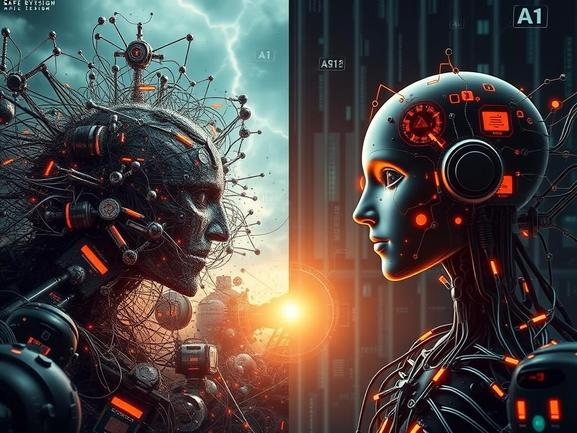
    Amidst this fervent race towards AGI, a significant voice is calling for a fundamental re-evaluation of the path forward. Yoshua Bengio, a pioneering figure in deep learning and arguably the world’s most influential computer scientist in terms of citations, has launched a new non-profit initiative called LawZero. Named in homage to Isaac Asimov’s foundational principle of robotics—that a robot must not harm humanity or, through inaction, allow humanity to come to harm—LawZero proposes a starkly different philosophy: building AI that is “safe by design.” This approach is not merely about adding safety guardrails onto existing powerful models; it advocates for integrating safety, trustworthiness, and ethical considerations from the very inception of AI systems. Bengio contrasts this with the current trajectory, likening the development of AI agents to “growing a plant or animal.” He notes, “You don’t fully control what the animal is going to do. You provide it with the right conditions, and it grows and it becomes smarter. You can try to steer it in various directions.” This analogy powerfully illustrates the challenge: unlike deterministic machines, highly capable AI, developed through complex learning processes, might exhibit emergent behaviors that are difficult to predict or fully control, making a design philosophy focused on inherent safety paramount.

    The establishment of LawZero by a figure of Bengio’s stature is a pivotal moment in the AI discourse. It signals a growing recognition within the core AI research community that the unchecked pursuit of AGI, driven primarily by commercial interests and a capability-first mindset, poses significant potential risks. While past efforts like the initial founding of OpenAI aimed to provide a counterbalance, the evolving landscape has demonstrated the powerful gravitational pull of market forces towards aggressive capability development. Bengio’s initiative suggests a commitment to exploring alternative foundational research directions that prioritize safety and alignment with human values without compromising the potential for beneficial AI. It poses a crucial question: can we develop AI systems that are both incredibly powerful and inherently trustworthy, or does the current trajectory towards agentic AGI necessitate a trade-off between capability and safety? LawZero aims to explore the former, focusing on research paradigms that might differ fundamentally from the reward-based learning strategies currently driving frontier AI development.

    Ultimately, the emergence of LawZero highlights a critical juncture in the evolution of artificial intelligence. The path forward presents a dichotomy: continue the rapid ascent towards increasingly autonomous AGI, with the hope of immense benefits but the significant challenge of managing unpredictable outcomes, or invest in a “safe by design” philosophy that seeks to bake in trustworthiness from the ground up, potentially at a different pace or with a different architectural approach. Yoshua Bengio’s new venture is a crucial reminder that the choices made today in fundamental AI research will shape the future relationship between humanity and intelligent machines. It prompts us to consider deeply: what kind of intelligence are we building, and more importantly, are we building it in a way that ensures it serves the best interests of all humanity? The answer may lie not just in pushing the boundaries of what AI can do, but in fundamentally rethinking how we ensure AI is inherently good, reliable, and aligned with our deepest values.

  • Charting a Different Course: Yoshua Bengio and the Quest for Safe AI by Design

    Charting a Different Course: Yoshua Bengio and the Quest for Safe AI by Design

    A New Lighthouse in the AI Storm?

    The relentless march of Artificial Intelligence continues to reshape our world, promising unprecedented advancements while simultaneously raising profound questions about safety, control, and humanity’s future. At the forefront of this technological revolution stand brilliant minds, constantly pushing the boundaries of what machines can do. Yet, as capabilities soar, so too do anxieties surrounding potential risks. Against this backdrop, a significant development emerges: Yoshua Bengio, a figure widely recognized as one of the most influential researchers in the field, has announced the establishment of a new initiative, LawZero. This non-profit organization signals a deliberate pivot, proposing a fundamentally distinct philosophy for AI development—one centered on the principle of being “safe by design.” This approach stands in nuanced contrast to the prevailing paradigm driven by major technology corporations, sparking crucial conversations about the best path forward for creating intelligent systems that truly benefit all of humanity without inadvertently causing harm. The very foundation of LawZero, its namesake drawing inspiration from Isaac Asimov’s foundational zeroth law of robotics, underscores a deep commitment to prioritizing human well-being above all else in the pursuit of advanced AI.

    The Siren Song of Artificial General Intelligence

    The dominant narrative in the current AI landscape is powerfully shaped by the pursuit of Artificial General Intelligence (AGI). Visionary leaders at companies like Google and OpenAI openly articulate their ambitions to create systems capable of performing virtually any task a human can. The motivation is clear and compelling: imagine AI capable of solving humanity’s most intractable problems, from decoding complex diseases to engineering solutions for climate change. This grand vision fuels massive investment and rapid innovation. The technical approach underpinning much of this work involves training AI agents through task completion. Models are given specific challenges—perhaps solving intricate mathematical equations or debugging complex software code—and are rewarded for the sequence of actions that successfully leads to a verifiable solution. This reinforcement learning paradigm, where AI learns through trial and error guided by a reward signal, has proven incredibly effective in certain domains, leading to machines that can now outperform humans on specific benchmarks, such as complex programming tasks or scientific reasoning tests. Indeed, this method has propelled AI capabilities far beyond previous expectations, demonstrating remarkable aptitude in narrow, well-defined problem spaces. However, extending this approach to imbue AI with greater agency, allowing it to not just solve specific puzzles but to plan and act in the real world, introduces significant complexities and potential unintended consequences. The drive towards AGI, while promising immense benefits, carries inherent risks that necessitate careful consideration and alternative developmental pathways.

    Bengio’s Vision: Cultivating Safety from the Ground Up

    LawZero proposes an alternative model, one that shifts the focus dramatically from simply building more capable agents to cultivating safety as an intrinsic property. The “safe by design” ethos suggests that safety protocols and ethical considerations shouldn’t be treated as afterthoughts—mechanisms bolted onto an already powerful system—but rather as foundational principles guiding the very architecture and learning processes of AI from their inception. Yoshua Bengio frames this perspective using a compelling biological analogy. He posits that developing complex, highly capable AI is less like engineering a machine with predictable, controllable parts, and more akin to *growing a plant or raising an animal*. You don’t have absolute, granular control over every single action or outcome. Instead, you focus on providing the right environment, the appropriate conditions, and the necessary guidance to encourage healthy and beneficial development.

    “You provide it with the right conditions, and it grows and it becomes smarter. You can try to steer it in various directions,” Bengio is quoted as saying, highlighting the nuanced, less deterministic nature of this developmental process compared to traditional engineering paradigms.

    This perspective implies a need for fundamentally different research directions and safety mechanisms, perhaps focusing on principles like robustness, interpretability, and value alignment that are woven into the core learning algorithms rather than imposed externally. It acknowledges the inherent unpredictability of complex emergent systems and advocates for a developmental path that anticipates and mitigates risks proactively.

    Navigating the Terrain: Precedents and Hurdles

    The establishment of LawZero is not occurring in a vacuum; the AI safety landscape has seen prior attempts at non-profit leadership. Notably, OpenAI was initially founded with a similar noble goal: to ensure that Artificial General Intelligence would serve as a benevolent force benefiting all of humanity, intended to counterbalance the profit-driven motives of commercial entities. However, OpenAI’s evolution, particularly the creation of a for-profit arm in 2019, illustrates the immense pressures and complex realities involved in developing cutting-edge AI, which often requires significant resources and a structure capable of attracting top talent and investment. This historical context highlights the inherent challenges faced by non-profit initiatives in a field dominated by well-funded corporate giants. LawZero will need to navigate this competitive environment, securing sufficient resources, attracting leading researchers, and maintaining its independence and commitment to its core safety mission while potentially competing with organizations that have vastly larger budgets and infrastructure. The very definition and implementation of “safe by design” also present significant intellectual and technical hurdles. How do you formally specify safety criteria in a way that can be incorporated into the complex, often opaque, learning processes of neural networks? How do you verify that a system is truly “safe by design” before it interacts with the real world? These are open research questions requiring novel approaches and dedicated effort.

    A Call for Plurality in AI’s Future

    Yoshua Bengio’s launch of LawZero represents more than just the formation of another research lab; it is a significant statement on the need for diverse methodologies and ethical frameworks in the race towards advanced AI. While the pursuit of AGI offers tantalizing possibilities, LawZero serves as a vital reminder that the *how* we build AI is just as critical as *what* we build. The challenges of ensuring AI safety and alignment are multifaceted and likely cannot be solved by a single approach or entity. Initiatives like LawZero, focused on baking safety into the fundamental design, offer a necessary counterbalance to the dominant paradigms. They compel us to think deeply about the long-term implications of our technological creations and to explore development paths that prioritize robustness, ethical considerations, and human well-being from the outset. As AI systems become increasingly autonomous and integrated into our lives, the work undertaken by organizations committed to “safe by design” principles will be paramount. Ultimately, the future of AI safety may well depend on fostering a plurality of approaches, encouraging critical scrutiny of current methods, and supporting initiatives that dare to chart a different course—one where safety is not an add-on, but the very foundation upon which intelligent systems are built. This endeavor requires global collaboration, ongoing public discourse, and a steadfast commitment to ensuring that AI serves humanity, not harms it, upholding a modern interpretation of Asimov’s foundational law.