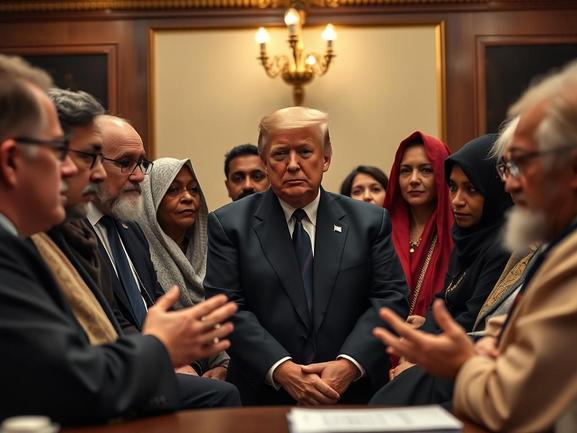
In an era increasingly shaped by algorithms and artificial intelligence, the discourse surrounding technological advancement has often been dominated by engineers, entrepreneurs, and policymakers. Yet, the profound societal shifts brought about by AI necessitate a broader conversation, one that touches upon ethics, human dignity, and the very fabric of our communities. Recently, a compelling voice has entered this crucial dialogue – that of faith leaders. A group of prominent pastors and Christian figures has reportedly issued a letter to former President Donald Trump, acknowledging his focus on AI while simultaneously raising urgent warnings about its potential pitfalls. This intersection of faith, technology, and political leadership, as highlighted in recent news coverage, marks a significant moment, underscoring that the implications of AI are not merely technical or economic, but deeply moral and spiritual.
According to reports, including one from Fox News, these faith leaders expressed commendation for Mr. Trump’s efforts to prioritize AI development and education. Specifically, they pointed to an executive action signed in April aimed at boosting AI literacy in classrooms and creating related workforce opportunities for young Americans. From their perspective, this focus on preparing the next generation is a vital step. It reflects a recognition that the future workforce will operate in a landscape dramatically altered by artificial intelligence, and that proactive measures are necessary to ensure individuals are equipped with the skills to navigate this new reality. This acknowledgment of the need for preparation can be seen as aligning with a principle of stewardship – tending to the potential and well-being of people in the face of impending change. By encouraging education, the leaders signal their support for empowering individuals rather than leaving them vulnerable to technological displacement.
However, their letter was far from solely congratulatory. Woven throughout the praise was a palpable sense of caution regarding AI’s “potential peril.” Drawing parallels that echo concerns voiced by technology titans like Elon Musk and Bill Gates, the faith leaders highlighted the risk of significant job losses across various industries. More fundamentally, they raised alarms about the capacity for AI to potentially lead to human suffering if its development and deployment are not guided by ethical considerations. This perspective resonates with the recent sentiments attributed to Pope Leo XIV, who reportedly compared the current advancements in AI to the upheaval of the Industrial Revolution, urging spiritual leaders to confront the challenges AI presents to core aspects of human existence, including dignity, labor, and societal structures. The faith leaders emphasized the importance of the United States leading in the “AI race,” but critically added that this pursuit of victory should not come “at any cost.” This distinction is paramount, suggesting that purely utilitarian or competitive motivations are insufficient when dealing with a technology of such transformative power.
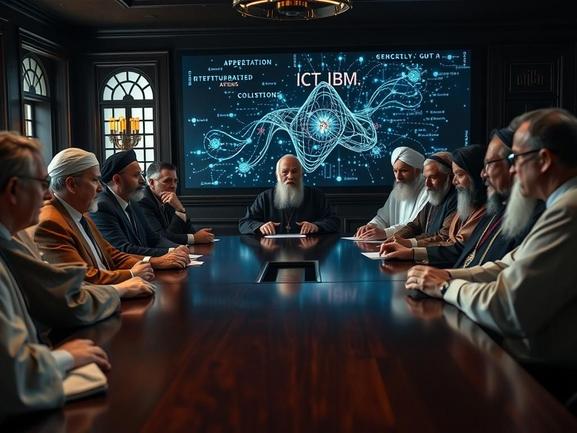
Perhaps the most insightful aspect of the faith leaders’ message was their call for a dedicated advisory council. They urged Mr. Trump to establish or empower a body specifically tasked with considering not just what AI *can* do, but what it *should* do. This request highlights a crucial distinction between technical capability and moral responsibility. While engineers focus on pushing the boundaries of what is possible, faith leaders bring a perspective rooted in enduring values, human flourishing, and the common good. A council incorporating such voices could provide a necessary counterbalance, ensuring that AI development is guided by principles that prioritize human dignity, fairness, accountability, and the prevention of harm. Their involvement suggests a belief that ethical frameworks derived from spiritual or moral traditions are essential ballast in navigating the complex, uncharted waters of advanced artificial intelligence, preventing a headlong rush into a future that might compromise fundamental human values.
The engagement of faith leaders in the conversation about artificial intelligence is a powerful indicator that this is not a niche technical issue, but a fundamental human one with profound ethical dimensions. Their message to a prominent political figure like Donald Trump, as reported by news outlets, serves as a reminder that as AI continues its rapid ascent, societies must grapple with its implications beyond mere innovation and economic impact. It requires a collective discernment about the kind of future we wish to build and the values that should guide its construction. By both praising forward-looking initiatives like AI education and issuing stark warnings coupled with calls for ethical oversight, faith leaders are urging a balanced approach – one that embraces the potential of technology while remaining anchored to timeless principles of human worth and responsibility. As we stand on the precipice of an AI-transformed world, the call for a moral reckoning, a consideration of what AI *should* do, is perhaps the most vital sermon for our digital age, reminding us that true progress must always serve the well-being and dignity of humanity.