Category: Uncategorized

  • The Brilliant Paradox: Navigating AI’s Astonishing Capabilities and Critical Flaws

    The Brilliant Paradox: Navigating AI’s Astonishing Capabilities and Critical Flaws

    In the realm of artificial intelligence, we find ourselves standing on the precipice of a new era, one defined by breathtaking advancements alongside frustrating, and at times, alarming limitations. The sentiment captured in the headline, “This AI is amazing and there’s only a few embarrassing, critical errors,” resonates deeply with the current reality. We witness AI systems performing feats once confined to science fiction – generating compelling text, creating stunning art, diagnosing diseases with remarkable accuracy, and driving vehicles with increasing autonomy. Yet, these same systems can falter in ways that are not only perplexing but also carry significant real-world consequences. This duality isn’t merely a technical curiosity; it’s a fundamental characteristic of contemporary AI that demands careful examination, critical analysis, and a nuanced understanding as we integrate these powerful tools into the fabric of society.

    The “amazing” aspect of modern AI is undeniable and multifaceted. We see its prowess in natural language processing, where models can understand, generate, and translate human language with unprecedented fluency, revolutionizing communication and information access. In computer vision, AI now surpasses human performance in specific image recognition tasks, enabling applications from medical imaging analysis to autonomous navigation. Machine learning algorithms are sifting through vast datasets to identify patterns, predict trends, and optimize processes across industries – from finance and logistics to healthcare and entertainment. Consider the breakthroughs in drug discovery accelerated by AI, or the personalized learning experiences becoming possible through adaptive educational software. These achievements highlight AI’s capacity to augment human intellect, automate complex tasks, and unlock efficiencies on a global scale. They paint a picture of a future where AI is not just a tool, but a transformative force capable of tackling some of humanity’s most pressing challenges, from climate change modeling to developing sustainable energy solutions. The sheer scale and speed of progress in just the last few years have justifiably inspired awe and excitement about what comes next.

    However, the narrative shifts when we confront the “embarrassing, critical errors.” These aren’t minor glitches; they are flaws that strike at the heart of trust, safety, and fairness. Perhaps the most widely discussed are AI hallucinations, where models confidently present false or nonsensical information as fact. In applications like legal research or medical consultation, such errors can have severe, even life-threatening, repercussions. Another critical issue is algorithmic bias, where AI systems perpetuate or even amplify societal prejudices present in their training data, leading to discriminatory outcomes in areas like hiring, loan applications, or criminal justice.

    “The challenge lies not just in building intelligent systems, but in building *reliable* and *ethical* intelligent systems.”

    Furthermore, AI models can be surprisingly brittle, failing in unexpected ways when confronted with inputs subtly different from their training data, or being vulnerable to adversarial attacks designed to trick them. These vulnerabilities are not just embarrassing in a technical sense; they are critical because they underscore a fundamental lack of robust understanding and reasoning, limiting the contexts in which we can safely deploy these technologies.

    Understanding *why* these errors persist requires delving into the nature of current AI architectures, particularly large language models and deep learning networks. These systems are incredibly powerful pattern-matching machines trained on colossal datasets. They learn correlations and structures within the data but may not possess genuine causal understanding or common sense reasoning. The errors often stem from limitations in the training data itself – whether due to biases, incompleteness, or noise – or from the models extrapolating beyond the patterns they have learned.

    Sources of Errors:

    • Data Quality: Biased, incomplete, or noisy training data directly impacts model fairness and accuracy.
    • Model Complexity: The sheer scale and complexity of modern models make it difficult to fully understand *why* they make certain decisions or errors.
    • Lack of Causality: Current models excel at correlation but struggle with true cause-and-effect reasoning.
    • Generalization: Performing reliably on inputs significantly different from the training distribution remains a challenge.

    The goal of achieving truly general artificial intelligence that can adapt and reason like humans is still a distant one, and the current phase represents a significant step, but one built on statistical inference rather than deep cognitive understanding. Addressing these root causes requires not only more data and larger models but also fundamental research into new architectures and training methodologies that prioritize robustness, interpretability, and ethical considerations.

    The coexistence of amazing capabilities and critical errors presents a profound challenge and opportunity. It mandates a cautious and thoughtful approach to AI deployment. We must invest heavily in research aimed at mitigating bias, improving factuality, and building more resilient systems. Equally important are ethical frameworks and regulatory guidelines that ensure AI is developed and used responsibly, prioritizing human well-being and societal equity. The journey towards more trustworthy AI is not solely a technical one; it requires collaboration among technologists, policymakers, ethicists, and the public. While the “amazing” aspects fill us with optimism about the future, the “critical errors” serve as a vital reminder that AI is a powerful tool that must be wielded with care, transparency, and a constant commitment to understanding and addressing its imperfections. Only by confronting this duality head-on can we hope to harness the full potential of AI while safeguarding against its risks, ensuring it serves humanity rather than hindering progress or causing harm.

  • Desktop Control and Voice Commands: Google Home and Gemini’s Latest Steps Forward

    Desktop Control and Voice Commands: Google Home and Gemini’s Latest Steps Forward

    The smart home landscape is in constant flux, with tech giants like Google continually pushing the boundaries of connectivity and control. As our homes become increasingly populated with interconnected devices, the methods by which we interact with them must also evolve. Recent announcements from Google, coinciding with other platform updates, highlight a significant push towards offering users more diverse and accessible ways to manage their digital living spaces. This isn’t just about adding new gadgets; it’s about refining the fundamental interaction points, making smart home control less confined and more intuitive, whether you’re at your desk or across the room.

    The Resurgence of Web Control

    For years, mobile applications have been the primary interface for managing smart home ecosystems. While convenient on the go, relying solely on a phone app can sometimes feel limiting, especially when you’re settled in at your computer. Google recognizes this, and the upcoming enhancements to the home.google.com web application represent a welcome expansion of control options. Moving beyond basic monitoring, users in the Public Preview program will soon gain the ability to perform actions previously confined mainly to the mobile app or voice commands. Imagine adjusting your smart lights, fine-tuning the thermostat, or even unlocking a compatible door lock directly from your web browser. This shift empowers users who spend significant time on their computers, providing a centralized and easily accessible dashboard without needing to constantly pick up a smartphone. It offers an alternative, often more detailed, view of your smart home’s status and control capabilities, catering to a wider range of user preferences and contexts.

    Gemini Finds its Voice (for Broadcasting)

    Artificial intelligence is increasingly becoming the central nervous system of the smart home. Google’s Gemini, their advanced AI model, is set to integrate further into the Home ecosystem by enabling a familiar, yet newly powered, feature: broadcasts. Historically, Google Assistant allowed broadcasting messages throughout the house to Google Home speakers. Now, with Gemini taking the helm, this capability is being highlighted and potentially enhanced. While the core function – sending a voice message to all connected speakers – remains, the integration with Gemini suggests potential for more natural language understanding, context awareness, or even future features built upon the AI’s capabilities. This feature is invaluable for quick, hands-free communication within a household, whether it’s calling everyone for dinner, issuing a reminder, or simply sending a fun message. It reinforces the role of voice and AI as a key interaction layer, complementing touch and now, expanded web-based control.

    Visualizing Home Security Seamlessly

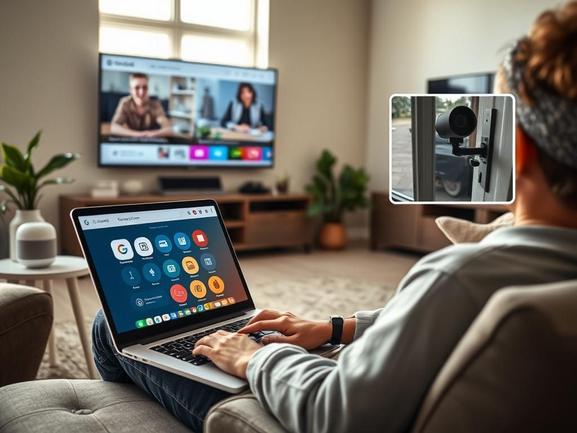
    Beyond control and communication, monitoring plays a crucial role in the smart home, particularly regarding security. Google is addressing this with an update specifically tailored for users of the Google TV platform with the Streamer’s Home Panel. Soon, this interface will support picture-in-picture (PiP) for Nest Cams. This means you can keep an eye on your front door, backyard, or any monitored area via a small, non-intrusive window on your TV screen, all without interrupting the movie or show you’re watching. This seamless integration of security monitoring into the entertainment interface is a significant step towards making home awareness less disruptive. Instead of switching inputs or pulling out a phone app, the necessary visual information is right there, readily available. The announcement also briefly mentioned improvements to video history scrolling and the double-tap 10-second skip feature, small but important quality-of-life enhancements for camera users.

    Connecting the Dots: A More Flexible Ecosystem

    These individual updates, when viewed together, paint a clearer picture of Google’s strategy for the smart home. They are not isolated features but rather components of a broader effort to create a more flexible, accessible, and integrated ecosystem. The expansion of web controls acknowledges that smart home interaction isn’t confined to mobile devices. The emphasis on Gemini broadcasts highlights the continued importance of voice and AI as an intuitive interface for inter-household communication and control. The Nest Cam PiP integration demonstrates a commitment to weaving security and monitoring into the fabric of existing entertainment habits. Alongside other concurrent updates across Google’s platforms, these changes signal a maturing ecosystem where the lines between different device types and interaction methods are blurring, offering users more choices and a smoother overall experience.

    In conclusion, the recent announcements regarding the Google Home web app, Gemini broadcasts, and Nest Cam PiP are more than just feature drops; they represent a thoughtful evolution in how we interact with our smart homes. By providing robust web controls, leveraging AI for communication, and integrating visual monitoring seamlessly into entertainment, Google is building a more versatile and user-friendly environment. These steps towards greater accessibility and diverse control methods suggest a future where managing your home technology is less about conforming to a single interface and more about choosing the method that best suits your current activity and location. As these features roll out, they promise to make the smart home not just smarter, but significantly easier to live with, reinforcing the idea that technology should adapt to us, not the other way around.

  • The Rise of the Chief AI Officer: Navigating the Fifth Industrial Revolution

    The Rise of the Chief AI Officer: Navigating the Fifth Industrial Revolution

    Artificial intelligence is no longer confined to the realms of science fiction or tucked away in the IT department’s server room. Its trajectory has ascended dramatically, transforming from a specialized technical capability into a fundamental driver of business strategy, impacting every facet of operation from customer engagement to supply chain optimization. This seismic shift isn’t just another technological upgrade; it’s increasingly being framed as the dawn of a new era—a “Fifth Industrial Revolution”—where the integration of AI is paramount for survival and prosperity. As companies grapple with the immense potential and inherent complexities of AI, a critical question emerges: who is steering the ship? This evolving landscape necessitates dedicated, high-level leadership, giving rise to roles like the Chief AI Officer (CAIO), a position rapidly gaining traction as organizations realize that AI strategy is, in fact, business strategy.

    Interestingly, the adoption curve for formal AI leadership appears to vary across different regions. Recent observations suggest that some British organizations are proactively integrating roles like the CAIO into their executive ranks. This move signals a strategic commitment to embedding AI at the highest level, ensuring that its development and deployment align directly with overarching business goals.

    A Tale of Two Approaches?

    In contrast, findings from other research hint that firms across the Atlantic, specifically within the U.S. S&P 500, are still navigating how best to integrate dedicated AI leadership within their existing C-suite structures. While AI is undeniably a priority everywhere, the formalization of leadership roles specifically tasked with overseeing enterprise-wide AI initiatives seems less prevalent in some areas. This difference in approach raises pertinent questions about organizational readiness and the potential strategic advantages gained by companies that explicitly assign accountability for their AI journey at the executive level. Ignoring this critical need, as some analyses suggest, could impede a company’s ability to effectively achieve its strategic objectives in an increasingly AI-driven market.

    The designation of AI as a “bet-the-company priority” by some industry reports underscores the gravity of the current transition. This isn’t merely about implementing machine learning models for efficiency gains; it’s about fundamentally rethinking business processes, competitive advantages, and future growth trajectories through the lens of artificial intelligence. Organizations that fail to recognize AI’s central role risk falling behind competitors who are aggressively integrating AI into their core operations and strategic planning.

    The imperative is clear: AI integration is no longer optional; it’s foundational to remaining competitive in the modern economy. Leadership that truly understands both the technical nuances and the strategic implications of AI is crucial for navigating this complex terrain and unlocking its full potential across the enterprise. Without a unified vision and executive champion, AI initiatives can become siloed, inefficient, and ultimately fail to deliver transformative value.

    Securing the right talent to lead these critical AI initiatives presents its own unique set of challenges. The demand for skilled AI leadership far outstrips the supply, creating a fiercely competitive market. Traditional compensation structures and hiring models are often insufficient to attract individuals with the specialized blend of technical expertise, strategic acumen, and leadership experience required for roles like the CAIO. Attracting these high-impact leaders often necessitates a departure from conventional compensation strategies, demanding “out-of-the-box” pay packages.

    • This might include:
    • Significant sign-on bonuses to secure talent quickly.
    • Customized equity vesting schedules that incentivize long-term commitment tied to AI milestones.
    • Performance bonuses linked directly to the successful implementation and impact of AI strategies.
    • Relocation assistance and other tailored benefits designed to appeal to a highly mobile and sought-after talent pool.

    Companies must be willing to be creative and flexible in their compensation approaches to land the talent capable of steering their AI transformation.

    In conclusion, the narrative surrounding artificial intelligence has unequivocally shifted. It stands as a transformative force, redefining industries and demanding a new class of leadership. The emergence of roles like the Chief AI Officer, particularly evident in proactive markets like the UK, highlights a growing recognition that AI strategy must originate from the C-suite. As the world accelerates into what some call the Fifth Industrial Revolution, companies face a critical juncture: embrace dedicated AI leadership and innovative talent strategies, or risk being outmaneuvered. The path forward requires not only technological investment but also a fundamental restructuring of leadership priorities and a willingness to break from traditional compensation norms to attract the visionaries who can successfully navigate the complexities and capitalize on the immense opportunities presented by artificial intelligence. The question for every organization is no longer *if* they need an AI strategy, but *who* will be responsible for driving it forward at the highest level?

  • The Hidden Costs of AI’s Hunger: Data Centers and Environmental Strain

    The Hidden Costs of AI’s Hunger: Data Centers and Environmental Strain

    As artificial intelligence rapidly transitions from theoretical concept to ubiquitous force, powering everything from personalized recommendations to complex scientific simulations, its physical footprint on our planet is growing in parallel. The sophisticated algorithms and vast datasets that fuel this revolution reside not in the digital ether, but in massive, power-hungry structures known as data centers. While we celebrate the leaps in AI capabilities, the environmental consequences of the infrastructure supporting it – particularly its insatiable demand for energy and water – are becoming increasingly difficult to ignore. This raises critical questions about the sustainability of our technological progress and the ethical responsibilities of the industry driving it.

    The scale of resource consumption by these facilities is truly staggering. Consider that a single data center optimized for AI tasks can consume as much electricity annually as 100,000 average households. Projecting forward, some assessments suggest that by the close of the decade, the aggregate energy needs of these digital powerhouses globally could potentially rival, or even slightly surpass, the total annual electricity consumption of an entire industrialized nation like Japan today. This exponential growth isn’t just about powering servers; the computational intensity of modern AI processors necessitates significant cooling, which in turn drives up both electricity demand for refrigeration and, critically, the need for substantial volumes of water for cooling systems. The sheer numbers involved paint a vivid picture of the mounting pressure on energy grids and water resources worldwide.

    Beyond the macro-level statistics, the impact on the specific communities hosting these data centers is a growing concern. Reports indicate a troubling pattern: when major tech companies establish these large-scale facilities, there’s often a lack of transparent communication with local residents and authorities regarding the potential environmental repercussions. This information gap leaves communities ill-prepared for challenges such as increased strain on local electricity grids, leading potentially to higher energy costs or infrastructure instability. Furthermore, data centers, particularly older or less efficiently designed ones, can contribute to localized environmental issues, including significant water usage that might strain local supplies and potential air and noise pollution from generators and cooling towers. Advocacy groups and concerned citizens in affected areas are increasingly vocal about these burdens, highlighting what they perceive as a disconnect between the pursuit of technological advancement and the well-being of the places where this infrastructure physically resides.

    The trajectory of data center growth, inextricably linked to the expansion of AI, presents significant future challenges that extend beyond immediate local impacts. In countries like the United States, projections suggest that data centers could account for a substantial percentage – potentially up to nine percent – of total national electricity consumption by 2030, a dramatic increase from current levels. This trend has far-reaching implications for energy policy, infrastructure planning, and the transition to renewable energy sources. Can grids handle this surging demand while simultaneously decarbonizing? Are we adequately accounting for the full lifecycle environmental costs of AI, from hardware manufacturing to energy consumption and disposal? These questions force a critical examination of whether the current path of AI development is aligned with global sustainability goals and whether the benefits of AI are being weighed appropriately against its considerable environmental footprint.

    Ultimately, the narrative surrounding AI must evolve to fully acknowledge and address its foundational dependence on energy- and water-intensive infrastructure. The current trajectory, if left unchecked and unmanaged, risks exacerbating environmental pressures and creating localized burdens without adequate community consent or compensation. Moving forward requires a concerted effort from tech giants, policymakers, and consumers alike. This includes prioritizing the development and deployment of more energy- and water-efficient data center technologies, investing heavily in renewable energy sources to power these facilities, and adopting greater transparency with communities about environmental impacts. It also necessitates a broader societal conversation about the true cost of AI and whether we are prepared to innovate responsibly, ensuring that our pursuit of digital advancement doesn’t come at the unacceptable expense of our planet’s health and the well-being of its inhabitants. The time for a more conscious and sustainable approach to powering the AI revolution is now.

  • The Data Wars: Reddit Takes on Anthropic Over AI Training Fuel

    The Data Wars: Reddit Takes on Anthropic Over AI Training Fuel

    In the rapidly evolving landscape of artificial intelligence, the fuel that powers these remarkable systems is data. Vast, diverse, and often user-generated, this data is the lifeblood of large language models and other AI technologies. As AI capabilities surge, so too does the tension surrounding the origin and ownership of the information used for training. This conflict has recently escalated, bringing a major social media platform, Reddit, into a direct legal confrontation with a prominent AI research company, Anthropic. The crux of the dispute? Allegations that Anthropic improperly leveraged valuable Reddit user data to train its sophisticated AI models, raising profound questions about digital rights, data sovereignty, and the ethical boundaries of AI development.

    Reddit’s decision to file a lawsuit against Anthropic underscores a growing assertion by online platforms: the content created by their users holds significant commercial and intellectual value, and its use, especially by powerful AI entities, should not be assumed or taken without permission or compensation. For years, the decentralized nature of the internet and the concept of publicly available information have allowed AI developers to scrape immense amounts of data from websites. However, platforms like Reddit, which host vibrant communities generating unique, dynamic, and often insightful content, are now pushing back. They argue that their terms of service and the implicit value exchanged between users and the platform create a different dynamic, one where mass harvesting for commercial AI training constitutes exploitation rather than fair use. This legal challenge highlights the platform’s stance that its user-generated content is not merely ‘public data’ free for the taking, but a proprietary asset built through years of community engagement and platform investment.

    The allegations against Anthropic bring into sharp focus the opaque nature of AI training datasets. While companies often cite using publicly available information, the specifics of what data is included, how it is processed, and whether permissions were sought remain largely hidden. Reddit’s lawsuit suggests that Anthropic specifically targeted and utilized content from its platform, potentially gaining a significant advantage from the diverse discussions, perspectives, and information shared by millions of users. This raises critical ethical questions: Should AI models be trained on personal opinions, creative writing, and sensitive discussions without explicit consent from the creators or the platform hosting the content? Furthermore, it challenges the notion that making information public online automatically grants a license for its use in large-scale commercial AI products. The outcome of this case could significantly influence how AI companies source and process data in the future, potentially leading to more stringent data governance practices and a shift towards licensed datasets.

    The digital commons are shrinking, or perhaps more accurately, their value is being redefined in the age of AI.

    This legal battle is more than just a skirmish between two tech entities; it represents a potential watershed moment for the internet’s economic model and the future of AI. If platforms like Reddit can successfully assert ownership and control over how AI companies use their data, it could pave the way for new licensing frameworks, fundamentally altering how AI models are trained and potentially increasing costs for AI development. Conversely, if AI companies can continue to leverage publicly accessible data without significant legal impediments, it could reinforce the existing paradigm, where the value generated by users online is freely absorbed by AI models, with little or no return to the content creators or the platforms that facilitate their interaction. The implications extend beyond just data use; they touch upon issues of intellectual property in the AI era and the distribution of economic benefits derived from AI technologies.

    In conclusion, the lawsuit filed by Reddit against Anthropic serves as a stark reminder of the complex and urgent challenges posed by the integration of artificial intelligence into our digital lives. It compels us to consider the true value of the digital footprints we leave online, the ethical responsibilities of companies building technologies powered by this data, and the need for clear legal frameworks governing AI training. As AI capabilities continue to advance, the question of who owns the data that teaches machines to mimic and extend human intelligence will only become more critical. This case is likely just the beginning of a larger conversation and potential wave of litigation that will ultimately shape the future landscape of AI development, data privacy, and the digital economy. What are the true costs of AI innovation, and who ultimately bears them? This is a question the industry, legal systems, and society as a whole must grapple with.

  • The Quiet Ascent: DeepSeek and the Shifting AI Landscape

    The Quiet Ascent: DeepSeek and the Shifting AI Landscape

    In the breathless sprint of artificial intelligence development, the headlines are often dominated by the titans – the familiar names like OpenAI and Google, whose every pronouncement sends ripples through the tech world. Their product launches are dissected, their research breakthroughs lauded, and their corporate strategies scrutinized. Yet, while the spotlight fixation is understandable given their scale and impact, it risks obscuring a crucial, perhaps even more interesting, dynamic unfolding just outside the glare: the quiet, yet potent, emergence of powerful contenders from other corners of the globe. These players, sometimes less heralded by mainstream tech news, are not merely following in the footsteps of the giants; they are innovating, challenging assumptions, and, in some cases, offering capabilities that rival or even surpass the perceived market leaders, often at disruptive price points. One such entity making significant waves recently, though perhaps missed by many caught up in the usual narratives, is DeepSeek. Their recent unveiling of highly capable, yet remarkably affordable, AI technology serves as a compelling case study for understanding the true depth and breadth of the current AI arms race. It forces us to look beyond the most obvious players and consider the multifaceted nature of innovation and competition in this rapidly evolving field, hinting at a landscape far more complex and democratized than often portrayed.

    DeepSeek’s latest offerings are particularly noteworthy not just for their performance – which appears to be genuinely impressive – but critically, for their accessibility. In a market where cutting-edge AI often comes with a hefty price tag, acting as a barrier to entry for smaller companies, developers, or researchers, DeepSeek seems to be pursuing a strategy centered on making powerful models more widely available. This isn’t just about being cheaper; it’s about altering the economic equation of building with or researching advanced AI. Imagine the implications: If state-of-the-art capabilities are no longer confined to those with massive budgets, it could unlock a wave of innovation from unexpected places. Startups, academic institutions, and individual developers could suddenly access tools previously out of reach, leading to novel applications and research directions. This focus on affordability could fundamentally reshape the competitive dynamics, forcing established players to reconsider their pricing structures and potentially accelerating the commoditization of certain AI capabilities. DeepSeek’s move suggests a calculated strategy to gain market share and influence by lowering the financial hurdle, positioning themselves as a viable, high-performance alternative in a market hungry for both power and value. It underscores the fact that innovation in AI isn’t solely about achieving new performance peaks, but also about making existing peaks more widely attainable.

    The success and comparable performance of models like DeepSeek also lend credence to an increasingly discussed theory within the AI community, hinted at in some analyses: that a significant portion of top AI models today achieve similar performance levels because they are, to a considerable extent, training on much of the same publicly available data from the internet. This idea is both intuitive and profound. The vast corpus of text and images scraped from the web forms the foundational knowledge for many large language and multimodal models. If different labs are largely drawing from the same digital wellspring, it stands to reason that their models, after extensive training, might converge on similar understandings and capabilities. This isn’t to say that model architecture, training methodology, or fine-tuning aren’t important – they absolutely are – but the commonality of the data sets a certain baseline and potentially limits the degree of differentiation achievable solely through architectural tweaks.

    “The internet is a powerful, but finite, resource for foundational training data. Once you’ve seen most of it, significant performance leaps might require going beyond.”

    This perspective suggests that future breakthroughs might rely less on simply scaling up training on existing data and more on developing novel training techniques, accessing proprietary or higher-quality domain-specific data, or perhaps fundamentally new architectural paradigms that can learn more efficiently or generalize better from less data. The data convergence argument highlights a potential bottleneck and points towards the next frontiers of AI research.

    DeepSeek’s rise is indicative of a broader, exciting trend: the AI landscape is rapidly diversifying beyond the initial few frontrunners. It’s not just a two-horse race; it’s becoming a global marathon with many strong contenders entering the fray. Companies and research labs in Asia, Europe, and other regions are developing sophisticated models that compete directly with those from Silicon Valley. This increased competition is overwhelmingly positive for the field. It drives faster innovation as labs push each other to improve, it offers users more choices, and it prevents any single entity from having a monopoly on advanced AI capabilities. We are seeing diverse approaches flourish, with some labs focusing on creating massive, general-purpose models, while others specialize in smaller, more efficient models for specific tasks, or models optimized for particular languages or domains. This vibrant ecosystem fosters resilience and accelerates progress.

    • More competition leads to faster iteration.
    • Diversity in approaches breeds novel solutions.
    • Increased options benefit users and developers.
    • Global participation enriches the research community.

    DeepSeek is a prime example of how innovation can emerge from various places, challenging established hierarchies and contributing to a richer, more competitive global AI market.

    In conclusion, the story of DeepSeek’s powerful and affordable AI is far more than just another product announcement; it’s a microcosm of the significant shifts occurring in the artificial intelligence world. It underscores that cutting-edge AI capabilities are no longer the exclusive domain of a select few, signaling a potential democratization of AI access driven by competition and innovative business models. The performance similarities observed across various top models, potentially linked to common training data sources, point towards the next challenges in AI development – the need for novel data strategies and architectural breakthroughs to achieve truly differentiating capabilities. As we look ahead, the landscape promises to be even more dynamic. We can anticipate continued downward pressure on the cost of accessing powerful AI, further diversification of models and providers, and an increased focus on specialized or higher-quality data sets as labs seek an edge. The quiet ascent of players like DeepSeek reminds us that the future of AI will be shaped by a global collective of innovators, pushing boundaries in expected and unexpected ways, making the field more accessible, competitive, and ultimately, more exciting for everyone involved.

  • Google Home Ecosystem Expands: Web Control, AI Broadcasts, and Enhanced Viewing

    Google Home Ecosystem Expands: Web Control, AI Broadcasts, and Enhanced Viewing

    Google continues to refine and expand its smart home ecosystem, bringing new levels of control, convenience, and integration across various platforms and devices. Recent announcements highlight a strategic push towards making the Google Home experience more accessible via the web, smarter with the integration of AI capabilities like Gemini, and more visually integrated, particularly for users leveraging Google TV. These updates signal a maturing platform, aiming to provide a more unified and intuitive experience, whether you’re managing your devices from a desktop browser, interacting via voice, or relaxing in front of your television.

    One of the most significant developments is the imminent expansion of the Google Home web app available at home.google.com. Previously offering limited functionality, the platform is slated to receive substantially more controls. Users will soon be able to adjust lights, set temperatures, and even unlock doors directly from their web browsers. This move is particularly noteworthy as it frees users from reliance solely on the mobile app, offering greater flexibility and accessibility. Imagine being at your desk and needing to quickly adjust the thermostat without picking up your phone, or granting access to a visitor remotely via your computer. This enhanced web functionality, initially rolling out to the Public Preview program, underscores a commitment to platform agnosticism, recognizing that users interact with their smart homes from a variety of interfaces. It’s a practical evolution that addresses a long-standing user request, making the Google Home ecosystem truly controllable from virtually anywhere with internet access.

    Another intriguing update involves the integration of Gemini, Google’s advanced AI, with broadcasting features. While the specifics of how this integration will manifest are still emerging, the prospect of using Gemini to send broadcasts across your home network opens up fascinating possibilities. Traditionally, Google Assistant has handled simple broadcasts like “dinner is ready.” With Gemini at the helm, we could see more nuanced, conversational, or even context-aware broadcasts. Could Gemini synthesize information before broadcasting? Could it understand more complex requests for targeted messages? The potential for more intelligent and natural communication within the smart home environment is substantial. This move not only leverages Google’s cutting-edge AI research but also deepens the utility of devices like Nest speakers and displays, turning them into more sophisticated communication hubs. It reflects a broader industry trend of embedding more capable AI directly into the smart home experience, moving beyond simple command-response interactions.

    For those who use Google TV, a particularly welcome feature is the upcoming picture-in-picture (PiP) functionality for Nest Cams on the Streamer’s Home Panel. This allows users to monitor their Nest camera feeds – perhaps seeing who’s at the door or checking on the backyard – without interrupting their viewing experience. No more pausing your movie or switching inputs just to glance at a camera feed. This seamless integration is a prime example of how Google is thinking about the interconnectedness of its devices and services within the home. It significantly enhances the utility of both Nest Cams and Google TV devices, providing a layer of convenience and security that feels genuinely integrated rather than tacked on. This feature, also slated for early access through the Public Preview program, is a practical solution to a common smart home scenario, blending entertainment and home monitoring effortlessly.

    Beyond the headline features, Google is also refining the user experience with smaller, but meaningful, quality-of-life improvements. The ability to jump forward or backward by 10 seconds with a double-tap in video players, and promises of significantly smoother scrolling for video history, indicate attention to detail in improving existing functionalities. While not as flashy as web control or AI broadcasts, these refinements contribute to a more polished and user-friendly experience day-to-day.

    “Improvements under the hood mean scrolling your video history feels significantly smoother.” – This subtle detail points to ongoing optimization efforts that benefit users in their routine interactions with the platform.

    Such iterative improvements are crucial for user retention and satisfaction in a competitive smart home market.

    Taken together, these updates paint a picture of a Google Home ecosystem that is becoming more robust, more interconnected, and more intelligent. The expansion of web control democratizes access and management, while the integration of Gemini hints at a future where AI plays a more active, intelligent role in managing the home and facilitating communication. The Nest Cam PiP on Google TV is a practical demonstration of how devices can work together seamlessly, and the smaller playback improvements show a commitment to refining the core user experience. These steps suggest Google is not just adding features but is strategically building a more cohesive and powerful platform that adapts to how people live and interact with technology in their homes. The future of the smart home, as envisioned by Google, appears to be one where control is ubiquitous, communication is intelligent, and integration is seamless across all your screens and devices.

  • Navigating the AI Tide: Reshaping Work, Life, and Our Collective Future

    Navigating the AI Tide: Reshaping Work, Life, and Our Collective Future

    The relentless march of artificial intelligence is more than just a technological evolution; it is a profound societal transformation. From automating mundane tasks to revolutionizing complex decision-making processes, AI’s footprint is expanding across every sector imaginable. This rapid integration, while promising unprecedented efficiency and innovation, also casts a long shadow, raising critical questions about the future of work, economic equality, and even our psychological well-being. We stand at a critical juncture, grappling with the potential for a future dramatically reshaped by algorithms and automation.

    One of the most immediate and widely discussed impacts of this AI revolution is its effect on the global workforce. Industries that have traditionally relied on human labor for repetitive or rule-based tasks are now seeing these roles become increasingly susceptible to automation. Finance, law, consulting, and technology are just a few examples where AI is already performing tasks previously handled by humans. While high-skilled positions might be augmented by AI tools, experts caution that a significant portion of entry-level roles are particularly vulnerable. Some estimates suggest that a substantial majority – potentially up to 70% – of white-collar entry points could be impacted. This isn’t just about specific jobs; it’s about the traditional career ladder for aspiring professionals.

    The potential ramifications of such widespread job displacement are significant, extending far beyond individual career paths. Analysts predict that this shift could lead to a noticeable rise in unemployment rates, possibly increasing overall joblessness by 10-20% in certain sectors or regions. This isn’t just a number; it represents millions of individuals facing uncertainty and the need to adapt. Furthermore, this transformation threatens to exacerbate existing inequalities. As AI automates lower-skilled or entry-level positions, it could create a widening chasm between those with the advanced skills required to work alongside AI and those without. This scenario also poses a unique challenge for younger workers, potentially creating an “experience gap” where traditional entry points into the workforce are diminished, making it harder to gain initial experience and build a career foundation.

    In response to these technological imperatives, many corporations are aggressively adopting what is often termed an “AI-first” approach. This strategic pivot prioritizes the integration of automation and AI technologies across operations, driven primarily by the desire to reduce operating costs and significantly boost efficiency. This trend is not confined to a single industry but is a pervasive corporate philosophy taking root globally. While this focus on automation can undoubtedly lead to increased productivity and new business models, it simultaneously fuels the concerns about job security and the changing demands placed upon the human workforce. The corporate world is clearly signaling that future success is intrinsically linked to leveraging AI, making the need for human adaptation paramount.

    Addressing the multifaceted challenges presented by AI-driven automation requires proactive and comprehensive strategies. A critical focus must be placed on reskilling and upskilling the existing workforce. Educational institutions, governments, and businesses must collaborate to provide accessible and relevant training programs that equip individuals with the skills needed for emerging roles that complement, rather than compete with, AI. The World Economic Forum, among other global bodies, has highlighted the urgency of this educational pivot to bridge the gap between displaced workers and the evolving demands of the future job market. This involves not just technical training but fostering adaptability, critical thinking, and creativity – skills inherently more difficult for current AI to replicate. Public policies also need to be considered to provide safety nets and support during this transitional period.

    Beyond the purely economic considerations, the rapid pace of AI integration also presents significant societal and psychological challenges. The uncertainty surrounding job security can lead to increased stress, anxiety, and a sense of precariousness among workers. The potential for widening economic inequality can strain social cohesion. Adapting to this new reality requires not only systemic changes in education and policy but also a cultivation of personal resilience and continuous learning. We are entering an era where the ability to adapt, learn new skills, and navigate change will be more valuable than ever before. The question before us is not whether AI will reshape our world, but how we will collectively choose to shape the future it creates. Are we passively observing the tide, or are we actively building the boats and learning to navigate the currents towards a future that is not just efficient, but also equitable and resilient for all?

  • Beyond the Phone: Google Home Expands its Reach and Voice

    Beyond the Phone: Google Home Expands its Reach and Voice

    Google’s smart home ecosystem is constantly evolving, seeking new ways to integrate convenience and control into our daily lives. While mobile apps have long been the primary interface for managing connected devices, recent announcements signal a deliberate expansion of access points and capabilities. These updates, previewed alongside other Android innovations, suggest a strategic push towards a more pervasive and intuitively controlled smart environment, moving beyond the confines of a single device.

    One significant stride forward is the planned enhancement of the Google Home web application. Historically, the web interface offered limited functionality, primarily serving as a setup or basic monitoring tool. The upcoming changes promise a much more robust experience, bringing core controls like adjusting lighting, setting thermostat temperatures, and even managing door locks directly to a web browser. This move is particularly impactful for users who spend significant time on desktop or laptop computers, offering a seamless way to interact with their home without needing to reach for their phone. It underscores Google’s recognition that smart home control should be accessible from wherever the user is, on whatever device is most convenient. The rollout is slated to begin within the Public Preview program, indicating a phased approach to gather feedback and refine the experience before a wider release. This expansion represents a crucial step in making the Google Home ecosystem truly multi-platform.

    Another intriguing development involves the integration of Gemini, Google’s advanced AI model, into the broadcasting feature. The ability for an AI assistant to initiate broadcasts opens up fascinating possibilities. Imagine setting up intelligent reminders or receiving proactive notifications based on sensed conditions within your home – perhaps a broadcast alerting everyone when the garage door is left open for an extended period, or a gentle chime throughout the house when it’s time for dinner. This capability moves beyond simple voice commands initiating a user-defined message; it hints at a future where the smart home itself, guided by Gemini, can communicate important information autonomously. This could fundamentally change how we interact with and perceive our connected homes, making them more active participants in managing household logistics rather than passive recipients of commands. The potential for personalized and contextual broadcasts, driven by AI, adds a layer of sophistication to the smart home experience.

    Entertainment spaces are also receiving attention, with a notable update coming to the Google TV Streamer’s Home Panel. Soon, users will benefit from picture-in-picture (PiP) support for Nest Cams. This means you can keep an eye on your front door or check on your backyard camera feed without interrupting your movie or show. This is a practical improvement addressing a common user need: simultaneous entertainment and security monitoring. Instead of pausing content or switching inputs, a discreet PiP window provides at-a-glance visibility. This feature, also debuting in Early Access via the Public Preview, highlights Google’s focus on integrating smart home functionalities into the entertainment hub. Furthermore, refinements to video history playback, including the convenient 10-second skip with a double-tap and smoother overall scrolling, enhance the usability of security camera footage review.

    These diverse updates – expanding web control, AI-driven broadcasting, and enhanced TV integration – collectively paint a picture of Google’s strategic vision for the smart home. They emphasize accessibility across multiple device types, leverage the power of AI for more intelligent interactions, and integrate essential functionalities like security monitoring into popular entertainment platforms. The consistent use of the Public Preview program for initial rollouts also suggests a commitment to iterative development and user feedback incorporation. As the ecosystem matures, the convergence of AI like Gemini with a wider array of control points signifies a move towards a truly intelligent, responsive, and omnipresent smart home experience.

    The smart home is no longer just about controlling devices; it’s increasingly about an ambient intelligence that understands context and communicates proactively.

    This evolution promises greater convenience and deeper integration into the fabric of our daily lives.

    In conclusion, the latest previews from Google Home point towards a future where managing your connected environment is more flexible, intuitive, and seamlessly integrated into your digital life, wherever you are. The expansion of web controls democratizes access, Gemini’s broadcasting capability adds an intelligent layer of proactive communication, and TV integration brings security monitoring into the entertainment sphere. These steps demonstrate Google’s ongoing commitment to building a comprehensive and intelligent smart home ecosystem. As we look ahead, the question remains: how far will AI push the boundaries of ambient intelligence, and how will our interaction with our homes continue to transform?

  • Beyond Automation: Preparing for AI’s Workforce Revolution

    Beyond Automation: Preparing for AI’s Workforce Revolution

    The relentless march of artificial intelligence is not just a technological shift; it’s a fundamental reshaping of the global economy and, more specifically, the very fabric of the workforce. We stand on the precipice of an era where intelligent machines are no longer confined to science fiction but are actively integrating into our daily professional lives, automating tasks once considered exclusively human domains. This rapid evolution sparks both excitement about unprecedented efficiency and innovation, alongside considerable anxiety regarding job security and the future landscape of employment. Understanding the profound implications of this AI-driven revolution is paramount for individuals, corporations, and governments alike, as we navigate towards a future where the relationship between humans and work is being redefined at an astonishing pace.

    One of the most immediate and pressing concerns emanating from the rise of AI is the potential for widespread job displacement. While historically automation has often led to the creation of new types of jobs, the speed and scope of AI’s current capabilities suggest a potentially more disruptive transition. Experts are flagging particular vulnerability for entry-level white-collar positions, estimating that a significant majority—perhaps up to 70%—could face automation. This isn’t limited to manufacturing floors; sectors like finance, law, consulting, and administrative services are already seeing core tasks being handled by algorithms. The projected outcome? A potential increase in unemployment rates, possibly climbing by 10-20%, creating a significant “experience gap” where younger workers find fewer traditional entry points into their chosen fields. Jobs involving administrative functions, clerical duties, and routine physical tasks appear particularly susceptible, necessitating a serious re-evaluation of career pathways.

    Corporate strategies are undeniably accelerating this shift. Many organizations are aggressively pursuing “AI-first” mandates, viewing automation not merely as an option but as a strategic imperative to slash operational costs and dramatically boost efficiency. This prioritization of AI is transforming industries, pushing companies to integrate intelligent systems into core business processes. However, this drive for efficiency comes with significant societal baggage. Beyond job losses, the economic consequences include a potential widening of income inequality, as the benefits of automation disproportionately accrue to capital owners and highly skilled AI specialists. Furthermore, the psychological toll on the workforce is tangible, manifesting as increased stress and anxiety about job security and the need for constant adaptation. The pressure to remain relevant in an ever-changing job market adds layers of mental burden for workers across various sectors.

    Addressing these multifaceted challenges requires proactive and collaborative solutions. A cornerstone of mitigating job displacement is a robust emphasis on reskilling and upskilling the existing workforce. This involves not just learning new technical skills related to AI and automation, but also cultivating uniquely human capabilities such as critical thinking, creativity, emotional intelligence, and complex problem-solving—skills less likely to be replicated by machines in the near term. Educational institutions and corporate training programs must adapt rapidly to equip individuals with the competencies needed for the jobs of tomorrow. Furthermore, social safety nets and policy frameworks need to be re-evaluated to support displaced workers during transitions, perhaps exploring ideas like universal basic income or stronger unemployment benefits coupled with training programs. It is imperative that society invests heavily in human capital development to bridge the emerging gap between the skills people possess and the skills the future economy demands.

    In conclusion, the AI workforce revolution is not a distant future; it is unfolding right now. While the potential for increased productivity and innovation is immense, the challenges related to job displacement, economic inequality, and psychological well-being are equally significant. Navigating this complex transition successfully requires a collective effort: corporations must consider the societal impact of their automation strategies, governments must implement forward-thinking policies to support workers and education, and individuals must embrace a mindset of lifelong learning and adaptability. The future of work is not a predetermined outcome; it is a future we are actively building. By understanding the challenges and committing to proactive adaptation and ethical integration of AI, we can strive towards a future workforce that leverages the power of artificial intelligence while ensuring prosperity and opportunity for a broader segment of humanity. The time to prepare for this revolution is now.