
The smart home landscape is in constant flux, with tech giants like Google continually pushing the boundaries of connectivity and control. As our homes become increasingly populated with interconnected devices, the methods by which we interact with them must also evolve. Recent announcements from Google, coinciding with other platform updates, highlight a significant push towards offering users more diverse and accessible ways to manage their digital living spaces. This isn’t just about adding new gadgets; it’s about refining the fundamental interaction points, making smart home control less confined and more intuitive, whether you’re at your desk or across the room.
The Resurgence of Web Control
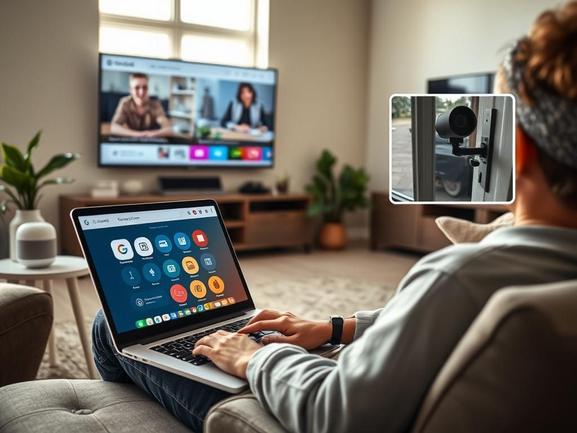
For years, mobile applications have been the primary interface for managing smart home ecosystems. While convenient on the go, relying solely on a phone app can sometimes feel limiting, especially when you’re settled in at your computer. Google recognizes this, and the upcoming enhancements to the home.google.com web application represent a welcome expansion of control options. Moving beyond basic monitoring, users in the Public Preview program will soon gain the ability to perform actions previously confined mainly to the mobile app or voice commands. Imagine adjusting your smart lights, fine-tuning the thermostat, or even unlocking a compatible door lock directly from your web browser. This shift empowers users who spend significant time on their computers, providing a centralized and easily accessible dashboard without needing to constantly pick up a smartphone. It offers an alternative, often more detailed, view of your smart home’s status and control capabilities, catering to a wider range of user preferences and contexts.
Gemini Finds its Voice (for Broadcasting)
Artificial intelligence is increasingly becoming the central nervous system of the smart home. Google’s Gemini, their advanced AI model, is set to integrate further into the Home ecosystem by enabling a familiar, yet newly powered, feature: broadcasts. Historically, Google Assistant allowed broadcasting messages throughout the house to Google Home speakers. Now, with Gemini taking the helm, this capability is being highlighted and potentially enhanced. While the core function – sending a voice message to all connected speakers – remains, the integration with Gemini suggests potential for more natural language understanding, context awareness, or even future features built upon the AI’s capabilities. This feature is invaluable for quick, hands-free communication within a household, whether it’s calling everyone for dinner, issuing a reminder, or simply sending a fun message. It reinforces the role of voice and AI as a key interaction layer, complementing touch and now, expanded web-based control.
Visualizing Home Security Seamlessly
Beyond control and communication, monitoring plays a crucial role in the smart home, particularly regarding security. Google is addressing this with an update specifically tailored for users of the Google TV platform with the Streamer’s Home Panel. Soon, this interface will support picture-in-picture (PiP) for Nest Cams. This means you can keep an eye on your front door, backyard, or any monitored area via a small, non-intrusive window on your TV screen, all without interrupting the movie or show you’re watching. This seamless integration of security monitoring into the entertainment interface is a significant step towards making home awareness less disruptive. Instead of switching inputs or pulling out a phone app, the necessary visual information is right there, readily available. The announcement also briefly mentioned improvements to video history scrolling and the double-tap 10-second skip feature, small but important quality-of-life enhancements for camera users.
Connecting the Dots: A More Flexible Ecosystem
These individual updates, when viewed together, paint a clearer picture of Google’s strategy for the smart home. They are not isolated features but rather components of a broader effort to create a more flexible, accessible, and integrated ecosystem. The expansion of web controls acknowledges that smart home interaction isn’t confined to mobile devices. The emphasis on Gemini broadcasts highlights the continued importance of voice and AI as an intuitive interface for inter-household communication and control. The Nest Cam PiP integration demonstrates a commitment to weaving security and monitoring into the fabric of existing entertainment habits. Alongside other concurrent updates across Google’s platforms, these changes signal a maturing ecosystem where the lines between different device types and interaction methods are blurring, offering users more choices and a smoother overall experience.
In conclusion, the recent announcements regarding the Google Home web app, Gemini broadcasts, and Nest Cam PiP are more than just feature drops; they represent a thoughtful evolution in how we interact with our smart homes. By providing robust web controls, leveraging AI for communication, and integrating visual monitoring seamlessly into entertainment, Google is building a more versatile and user-friendly environment. These steps towards greater accessibility and diverse control methods suggest a future where managing your home technology is less about conforming to a single interface and more about choosing the method that best suits your current activity and location. As these features roll out, they promise to make the smart home not just smarter, but significantly easier to live with, reinforcing the idea that technology should adapt to us, not the other way around.