
Google I/O is always a landmark event, offering a glimpse into the technological trajectory of one of the world’s most influential companies. The 2025 edition, as hinted by initial reports, seems to underscore a singular, overarching theme: the pervasive, accelerating integration of artificial intelligence into virtually every facet of the digital experience. It’s not just about new features; it’s about a fundamental shift in how we interact with technology, moving towards a world where AI isn’t just a tool, but an intrinsic part of our digital environment, constantly anticipating needs, facilitating tasks, and even enabling entirely new forms of creativity and communication. This year’s announcements, ranging from significant upgrades to Google’s flagship AI models to entirely new platforms and services, paint a vivid picture of this impending future. While the initial details provide a framework, a deeper dive reveals the potential implications, challenges, and exciting possibilities that lie beneath the surface of the key headlines.
At the heart of many announcements lies the evolution of Google’s generative AI family, particularly the advancements made with Gemini 2.5 Flash. Reports suggest this iteration is not merely an incremental update but represents substantial gains in efficiency and capability. We hear of it being faster, smarter, and even more theoretical – a descriptor that hints at enhanced abstract reasoning and problem-solving prowess. The claim of requiring 20% to 30% fewer tokens for tasks is particularly significant, suggesting not only potential cost savings but also faster processing times and potentially more complex outputs within given constraints. The enhancements across areas like reasoning, multimodality, coding, and response efficiency collectively point towards a model that is becoming increasingly robust and versatile. This multifaceted improvement positions Gemini not just as a conversational agent, but as a foundational technology poised to power a wide array of applications. The vision of Gemini evolving into a “universal AI assistant” is perhaps the most ambitious implication here. What does a universal assistant truly look like? It suggests seamless integration across all Google services and potentially third-party applications, proactive assistance that understands context across different tasks and platforms, and an ability to handle complex, multi-step requests that currently require switching between various tools. This isn’t just about answering questions; it’s about an AI that understands your workflow, anticipates your next move, and quietly assists in the background, making digital interactions smoother and more intuitive.
The discussion around a “universal AI assistant” naturally leads to questions of accessibility and how such advanced capabilities will be delivered to users. The mention of Google AI Ultra as a subscription service provides a crucial piece of this puzzle. While free tiers of AI capabilities will likely continue, the introduction of a paid ‘Ultra’ tier suggests that the most advanced, resource-intensive, or premium features will be gated behind a subscription. This mirrors strategies seen elsewhere in the tech world and raises interesting questions about the democratization of cutting-edge AI. Will the most powerful tools become exclusive to those who can afford a monthly fee? This could create a digital divide, where access to the most efficient and creative AI tools is not universal. Furthermore, I/O highlights often include exciting new applications of AI, and this year is no exception with the introduction of tools like Veo, Imagen, and Flow. While the source text is brief, describing them as “next-level creator tools,” the names themselves offer clues. Imagen is already known for image generation, suggesting further advancements there. Veo sounds potentially related to video, and Flow could perhaps encompass creative workflows or even interactive narrative generation. These tools represent the specialized application of AI power, moving beyond general assistance to enable users in specific creative domains. They signify Google’s push to empower creators with AI, but the details of their capabilities, accessibility (are they part of Ultra?), and potential impact on creative industries warrant close attention.
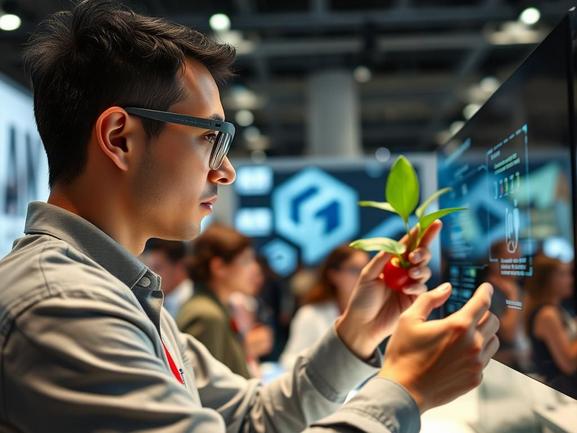
Beyond the core AI models and specialized tools, Google I/O always brings updates that impact the services we use daily. The changes coming to Google Search, powered by Project Astra’s multimodal capabilities, are particularly transformative. The idea of simply pointing your camera at something – an unfamiliar plant, a complex diagram, a historical landmark – and being able to ask natural language questions about it fundamentally changes the search paradigm. It moves from text-based queries to real-world visual interaction, blurring the lines between the physical and digital. This has profound implications for learning, exploration, and information retrieval. Furthermore, the new AI Mode shopping experience highlights how AI is being directly integrated into commercial interactions. Features that help you find inspiration, narrow down options, and even “try on” clothes via an image generator leverage AI for personalization and convenience. However, this also brings considerations around data privacy and the potential for algorithmic influence on purchasing decisions. Similarly, the mention of new Gmail AI tools, while unspecified in the source, conjures possibilities like automatic email summarization, intelligent drafting assistance, or even proactive prioritization of important messages. These tools promise to enhance productivity but also introduce a reliance on AI to filter and process our communications, raising questions about control and potential biases.
Finally, Google I/O often provides a glimpse into the future of computing platforms, and this year features significant updates on the hardware and spatial computing front. The renaming of Project Starline to Google Beam suggests a continued commitment to advanced telepresence technology, aiming to create more lifelike and immersive virtual interactions. While the underlying technology is complex, the user experience is key – how does ‘Beam’ enhance remote collaboration and connection beyond current video conferencing? Perhaps even more significantly, the “first look at Android XR on smart glasses” signals Google’s firm entry into the extended reality operating system space. This positions Android as a potential dominant force in the emerging market for augmented and virtual reality devices, much like it is in the mobile world. Smart glasses powered by Android XR could unlock a new generation of ambient computing, where information and digital interactions are overlaid onto our physical environment. This platform is crucial for delivering many of the AI-powered experiences discussed earlier, bringing multimodal search, AI assistance, and even creative tools into a spatial context. The success of Android XR will depend on developer adoption, hardware innovation, and creating compelling user experiences that make smart glasses a desirable and practical computing platform.
In conclusion, Google I/O 2025, as summarized by initial reports, appears to be a declaration of the ambient AI era. From the foundational improvements in models like Gemini 2.5 Flash and the strategic monetization with Google AI Ultra, to the transformative impacts on core services like Search and Gmail, and the forward-looking platforms like Google Beam and Android XR, the message is clear: AI is not just a feature; it is the new operating system for our digital lives. These advancements promise increased efficiency, unprecedented creative capabilities, and entirely new ways of interacting with information and each other. However, they also necessitate thoughtful consideration of accessibility, privacy, and the ethical implications of increasingly powerful AI. As these technologies mature and become more integrated, the questions shift from *what* AI can do to *how* we want it to reshape our world and our daily routines. The future presented at I/O is exciting and full of potential, but navigating this AI tide will require not just technological innovation, but also conscious choices about how we build and interact with the intelligent systems that are rapidly becoming our universal assistants.