
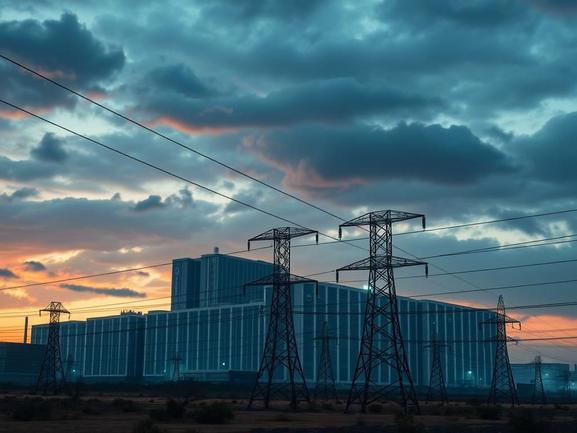
In the relentless march of technological progress, Artificial Intelligence stands out as perhaps the most transformative force of our era. From revolutionizing healthcare diagnostics to powering autonomous vehicles and composing compelling prose, AI’s capabilities seem boundless. Yet, beneath the dazzling surface of innovation lies a growing shadow: an insatiable appetite for energy. Recent analyses are sounding alarms, suggesting that the electricity consumption of artificial intelligence could very soon rival, and potentially surpass, that of notorious energy hogs like Bitcoin mining. This emerging reality presents a critical challenge, forcing us to confront the hidden environmental cost of our increasingly intelligent machines and question the sustainability of AI’s current growth trajectory.
Projections regarding AI’s future energy demand paint a striking, albeit complex, picture. Experts like Alex de Vries-Gao, whose work has previously illuminated the energy footprint of cryptocurrencies, are now turning their analytical lens towards AI. Utilizing methodologies that piece together fragmented data – from chip manufacturing volumes at titans like TSMC, which has seen a dramatic increase in AI-related chip production, to corporate earnings calls and publicly available hardware specifications – researchers attempt to triangulate the likely energy draw. Consulting firms are echoing these concerns, with reports forecasting significant upticks in overall electricity demand, partly attributed to the expansion of AI infrastructure alongside traditional data centers and persistent cryptocurrency operations. While precise figures remain subject to variables and future efficiencies, the consensus points towards an accelerating trend that demands serious attention, particularly as AI models grow exponentially larger and more complex, requiring immense computational power for training and inference.
Comparing AI’s energy use to that of Bitcoin mining offers a potent, albeit sometimes misleading, analogy. Bitcoin’s energy consumption is primarily tied to its Proof-of-Work consensus mechanism, a deliberate energy-intensive process designed for security. AI’s energy demand, conversely, stems from the sheer computational load of complex neural networks. Training a large language model, for instance, can consume staggering amounts of electricity over weeks or months, equivalent to the annual energy use of many homes. Once trained, running these models for inference (generating text, analyzing images, etc.) also requires significant power, especially at scale. While Bitcoin’s energy use is tied to transaction validation and network security, AI’s is linked directly to processing data, learning patterns, and performing intelligent tasks. The rapid deployment and scaling of AI across countless applications mean its energy footprint is not confined to a single activity but is distributed across a burgeoning digital landscape.
Implications Far Beyond the Data Center
- Environmental Impact: Increased electricity demand, if not met by renewable sources, directly contributes to greenhouse gas emissions and exacerbates climate change. The global push for net-zero emissions could be significantly hampered if AI’s energy needs continue to rely heavily on fossil fuels.
- Infrastructure Strain: Existing energy grids in many regions may not be equipped to handle the projected surge in demand from AI data centers. This could lead to the need for massive, costly upgrades and potentially impact energy reliability and pricing for consumers.
- Economic Factors: The cost of powering AI infrastructure is substantial and growing. This expense can influence the accessibility and deployment of AI technologies, potentially creating a divide between those who can afford the computational resources and those who cannot.
- Innovation vs. Sustainability: The race to build more powerful AI models often prioritizes performance over energy efficiency. There is a growing need for research and development focused on creating greener AI hardware, algorithms, and data center designs.
The potential for AI to consume vast amounts of energy by 2025 is not just an interesting technical statistic; it’s a looming environmental and infrastructural challenge. As AI becomes increasingly integrated into every facet of society and industry, its energy footprint becomes a critical factor in determining the sustainability of this technological revolution. Ignoring this issue would be short-sighted, risking significant environmental damage and straining global energy resources. The path forward requires a multi-faceted approach: fostering innovation in energy-efficient AI hardware and software, investing in renewable energy sources to power data centers, increasing transparency about the energy consumption of AI models, and developing policies that encourage sustainable practices within the AI industry.
In conclusion, while the promises of Artificial Intelligence are immense, its burgeoning energy demands present a significant hurdle that we must proactively address. The projections, though estimates, serve as a stark warning: the intelligence we are building requires a foundation of sustainable power. The choices made today regarding AI development, energy infrastructure, and policy will determine whether AI becomes a powerful tool for solving global challenges, including climate change, or inadvertently contributes to them. Balancing innovation with environmental responsibility is not just an option; it is an imperative for ensuring that the future AI-driven world is one we can sustainably inhabit. The conversation around AI needs to move beyond just its capabilities and delve deeply into its footprint – a footprint that is rapidly growing and has the potential to reshape our energy landscape in profound ways.