
Google I/O has consistently served as a pivotal moment for the tech giant to unveil its latest innovations and strategic direction, and the 2025 iteration proved no exception. While the keynotes often focus on the headline-grabbing features, a deeper dive into the announcements reveals a carefully orchestrated plan to weave artificial intelligence into the fabric of our digital lives, pushing boundaries in everything from communication and creativity to how we interact with the physical world through technology. This year’s conference painted a vivid picture of a future where AI is not just a tool, but an intelligent co-pilot, seamlessly integrating into workflows and experiences. Understanding the nuances of these announcements requires looking beyond the initial press releases and considering the potential long-term impact on users, developers, and the technological landscape as a whole. The emphasis was clearly on making AI more accessible, more powerful, and ultimately, more indispensable.
One of the most anticipated updates revolved around the evolution of Google’s flagship AI model.
Gemini Takes Center Stage: Faster, Smarter, More Efficient
The introduction of Gemini 2.5 Flash marked a significant step towards optimizing AI performance for broader applications. Google highlighted notable improvements across several critical domains:
- Enhanced Reasoning: The ability to understand and process complex information more effectively.
- Improved Multimodality: Greater proficiency in handling and integrating different types of data, such as text, images, and potentially audio or video.
- Increased Coding Efficiency: A reduction in the resources required to generate and process code, making development faster and cheaper.
- Reduced Token Usage: Requiring 20% to 30% fewer tokens according to internal evaluations, leading to faster and more cost-effective responses.
These technical advancements underpin Google’s vision of Gemini becoming a “universal AI assistant.” This isn’t merely about integrating AI into existing products; it’s about creating an intelligent layer that can understand context, anticipate needs, and proactively assist users across various platforms and tasks. The transition from a task-specific tool to a ubiquitous, intelligent partner represents a fundamental shift in how we might interact with technology on a daily basis.
The conference also shed light on Google’s strategy for monetizing its cutting-edge AI capabilities.
The Premium AI Experience: Google AI Ultra
While many AI features are becoming increasingly integrated into free services, the introduction of Google AI Ultra signals a clear move towards offering a premium subscription tier for access to the most advanced models and features. This strategy is not unique to Google, mirroring approaches seen elsewhere in the industry. However, Google’s vast ecosystem of services provides a unique opportunity to bundle advanced AI capabilities in a compelling package.
“The unveiling of Google AI Ultra underscores the growing market for high-performance artificial intelligence and sets the stage for how users might access and pay for the most powerful AI tools in the future.”
This move raises questions about the accessibility of cutting-edge AI and the potential for a digital divide between those who can afford the premium services and those who rely on the standard offerings. It highlights the ongoing challenge for tech companies to balance innovation with accessibility, ensuring that advanced technology benefits the broadest possible audience while also creating sustainable business models.
Beyond core AI models, Google showcased a suite of tools designed to empower creators.
Revolutionizing Creativity: Veo, Imagen, and Flow
The introduction of Veo (likely a video generation tool), Imagen (an advanced image generation tool), and Flow (speculated to be related to immersive content or animation) represents Google’s commitment to lowering the barrier to entry for high-quality content creation. These tools leverage AI to automate complex processes, allowing creators to focus on their vision rather than technical execution.
- Veo could dramatically change video production, making professional-looking content more accessible.
- Imagen builds upon previous image generation capabilities, offering greater control and realism.
- Flow’s potential in immersive media suggests a forward-looking approach to content consumption and interaction.
The implications for industries ranging from marketing and entertainment to education and personal expression are significant. These tools could democratize creativity, enabling individuals and small teams to produce content that previously required extensive resources and technical expertise. They also pose intriguing questions about authorship, authenticity, and the future of creative industries.
Perhaps one of the most impactful areas of change discussed was the transformation of how we find information.
The Future of Search: AI-Powered Discovery
Google Search, the cornerstone of the company, is undergoing a profound evolution. The integration of Project Astra’s multimodal capabilities is set to redefine the search experience. Instead of merely typing queries, users will be able to interact with the world around them using their camera:
Point your camera at an object -> Ask a question about it -> Get instant information.This shift moves search from a text-based interaction to a more intuitive, visual, and contextual experience. The new AI Mode shopping experience further exemplifies this, allowing users to find inspiration, compare products, and even visualize items on themselves using AI-generated imagery. This isn’t just about finding webpages; it’s about interacting with information and making decisions in entirely new ways. This evolution positions Google Search less as a static repository of links and more as a dynamic, intelligent assistant for navigating and understanding the physical and digital worlds.
Looking further into the future, Google also provided glimpses into advancements in hardware and immersive experiences.
Beyond the Screen: Google Beam and Android XR
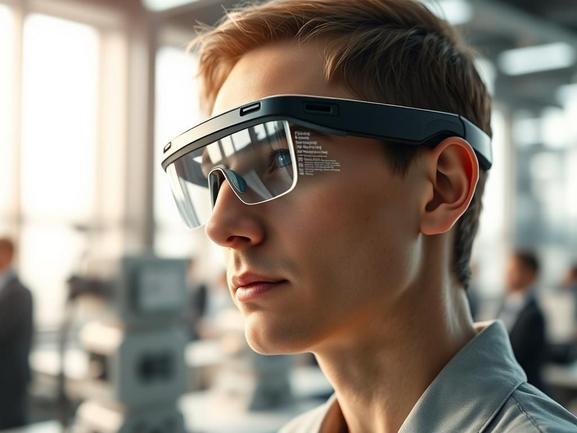
Project Starline, the futuristic video conferencing booth, has been rebranded as Google Beam, indicating a step closer to commercial viability. This technology, which creates incredibly lifelike 3D representations of participants, has the potential to revolutionize remote communication, making virtual interactions feel significantly more personal and engaging. Simultaneously, the first look at Android XR on smart glasses signals Google’s intent to play a significant role in the burgeoning extended reality space. While details might still be emerging, the development of an Android-based platform for smart glasses suggests a familiar ecosystem for developers and a potential pathway for bringing immersive experiences to a wider audience.
“These developments hint at a future where our digital interactions are not confined to flat screens but extend into the physical world through sophisticated hardware and intuitive software.”
The convergence of AI, advanced display technology, and robust software platforms like Android XR could pave the way for entirely new forms of computing and human-computer interaction, blurring the lines between the physical and digital realms.
Google I/O 2025 wasn’t just an update; it was a declaration of intent. The announcements collectively paint a picture of a company deeply committed to integrating sophisticated AI across its entire product spectrum, from foundational models and search to creative tools and future hardware platforms. The focus on faster, more efficient, and more capable AI models like Gemini 2.5 Flash, coupled with the introduction of premium tiers like Google AI Ultra, highlights both the technical progress and the evolving business models in the AI era. The innovations in search, creative tools, and immersive technologies like Google Beam and Android XR suggest a future where technology is more intuitive, more powerful, and more seamlessly integrated into our lives. As these technologies mature, they promise to transform not just how we use computers, but how we communicate, create, learn, and interact with the world around us. The real test, however, will lie in how Google navigates the ethical considerations, ensures equitable access, and builds user trust as these increasingly powerful AI systems become integral to our daily existence. The foundation has been laid; the coming years will reveal the true impact of this ambitious vision.