
Google continues to refine its smart home ecosystem, rolling out a series of updates poised to enhance user control, integrate artificial intelligence more deeply, and smooth out the cross-device experience. Recent previews highlight significant strides in the Google Home web application, the integration of Gemini for convenient new features, and subtle yet meaningful improvements to existing services like Google TV and camera history.
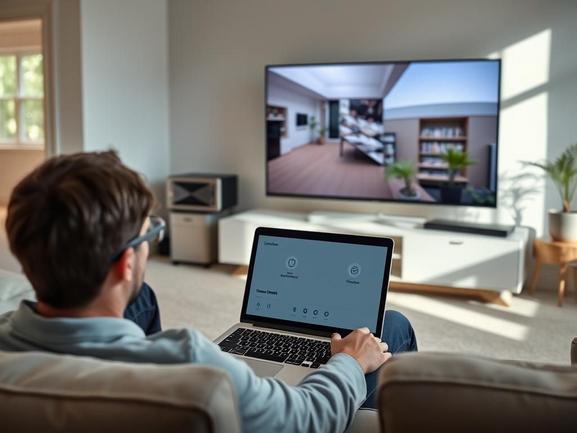
One of the most anticipated developments is the expansion of the Google Home web app’s capabilities. Soon, users will gain the ability to control a much wider array of smart home devices directly from their web browsers. Imagine adjusting your lighting levels, fine-tuning the thermostat settings, or even securely unlocking doors without needing to reach for a mobile device. This move towards a more robust web interface is particularly exciting for users who prefer managing their smart homes from a desktop or laptop, offering a more persistent and perhaps more detailed control panel than is always practical on a phone screen. It underscores a recognition by Google that smart home management needs to be accessible from wherever the user is most comfortable, adding a layer of convenience and flexibility that was previously less prominent in the web experience.
The integration of Gemini, Google’s advanced AI model, into the smart home landscape brings a novel interaction method. Specifically, Gemini will enable users to send broadcasts. Historically a feature primarily tied to Google Assistant on speakers and displays, bringing this capability to Gemini suggests a broader, potentially more intuitive way to relay messages throughout the home. One could hypothesize that this integration might allow for more natural language processing, perhaps understanding nuanced requests or even allowing broadcasts triggered by other contextual information known to Gemini. This represents an evolution in how users communicate with and through their connected devices, moving beyond simple command-and-response towards a more conversational and integrated interaction model powered by AI.
Beyond core controls and AI interactions, Google is also polishing the user experience across its device portfolio. A particularly practical update for those with Nest Cams and Google TV streamers is the upcoming picture-in-picture (PiP) support. This means you will soon be able to see a live feed from your Nest Cam – checking who’s at the door or monitoring the backyard – directly on your TV screen without interrupting your viewing experience or needing to switch inputs or devices. This seamless integration of security and entertainment hubs is a significant step towards a truly unified smart home experience, minimizing friction and making important information readily available when you need it most. It highlights a focus on utility and convenience in the shared spaces of the home.
Finally, underlying performance enhancements are also on the horizon, promising a smoother overall experience. Improvements to video history navigation, for instance, are set to make scrolling through past camera footage “significantly smoother.” While perhaps less glamorous than new controls or AI features, these under-the-hood optimizations are crucial for the day-to-day usability of smart home devices. A fluid and responsive interface, especially when reviewing potentially critical historical data, contributes significantly to user satisfaction and trust in the system. Combined with the ability to quickly jump forward or backward by 10 seconds with a double-tap in the player, these refinements demonstrate Google’s commitment to not just adding features, but also perfecting the fundamental interactions that users rely on daily.
Concluding Thoughts: Towards a More Connected and Accessible Home
These recent announcements paint a clear picture of Google’s strategic direction for the smart home: greater accessibility through expanded web control, enhanced interaction via powerful AI integration like Gemini broadcasts, and a commitment to a more fluid, cross-device experience across platforms like Google TV. By empowering users with more ways to interact with their devices and making those interactions smoother and more intuitive, Google is steadily building towards an ecosystem that feels less like a collection of gadgets and more like a truly integrated, intelligent living space. The expansion of the web app is a nod to diverse user preferences, Gemini’s inclusion opens doors for novel AI-driven interactions, and the PiP and history improvements address practical pain points. It leaves one pondering: what further steps will Google take to weave AI and ubiquitous access into the fabric of our homes, and how will these capabilities fundamentally change our daily routines?