
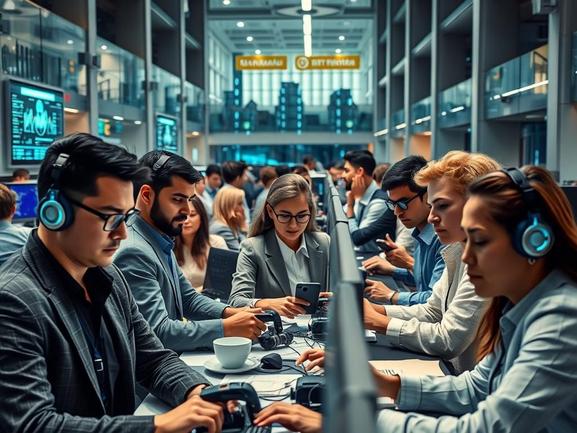
The relentless march of artificial intelligence is more than just a technological evolution; it is a profound societal transformation. From automating mundane tasks to revolutionizing complex decision-making processes, AI’s footprint is expanding across every sector imaginable. This rapid integration, while promising unprecedented efficiency and innovation, also casts a long shadow, raising critical questions about the future of work, economic equality, and even our psychological well-being. We stand at a critical juncture, grappling with the potential for a future dramatically reshaped by algorithms and automation.
One of the most immediate and widely discussed impacts of this AI revolution is its effect on the global workforce. Industries that have traditionally relied on human labor for repetitive or rule-based tasks are now seeing these roles become increasingly susceptible to automation. Finance, law, consulting, and technology are just a few examples where AI is already performing tasks previously handled by humans. While high-skilled positions might be augmented by AI tools, experts caution that a significant portion of entry-level roles are particularly vulnerable. Some estimates suggest that a substantial majority – potentially up to 70% – of white-collar entry points could be impacted. This isn’t just about specific jobs; it’s about the traditional career ladder for aspiring professionals.
The potential ramifications of such widespread job displacement are significant, extending far beyond individual career paths. Analysts predict that this shift could lead to a noticeable rise in unemployment rates, possibly increasing overall joblessness by 10-20% in certain sectors or regions. This isn’t just a number; it represents millions of individuals facing uncertainty and the need to adapt. Furthermore, this transformation threatens to exacerbate existing inequalities. As AI automates lower-skilled or entry-level positions, it could create a widening chasm between those with the advanced skills required to work alongside AI and those without. This scenario also poses a unique challenge for younger workers, potentially creating an “experience gap” where traditional entry points into the workforce are diminished, making it harder to gain initial experience and build a career foundation.
In response to these technological imperatives, many corporations are aggressively adopting what is often termed an “AI-first” approach. This strategic pivot prioritizes the integration of automation and AI technologies across operations, driven primarily by the desire to reduce operating costs and significantly boost efficiency. This trend is not confined to a single industry but is a pervasive corporate philosophy taking root globally. While this focus on automation can undoubtedly lead to increased productivity and new business models, it simultaneously fuels the concerns about job security and the changing demands placed upon the human workforce. The corporate world is clearly signaling that future success is intrinsically linked to leveraging AI, making the need for human adaptation paramount.
Addressing the multifaceted challenges presented by AI-driven automation requires proactive and comprehensive strategies. A critical focus must be placed on reskilling and upskilling the existing workforce. Educational institutions, governments, and businesses must collaborate to provide accessible and relevant training programs that equip individuals with the skills needed for emerging roles that complement, rather than compete with, AI. The World Economic Forum, among other global bodies, has highlighted the urgency of this educational pivot to bridge the gap between displaced workers and the evolving demands of the future job market. This involves not just technical training but fostering adaptability, critical thinking, and creativity – skills inherently more difficult for current AI to replicate. Public policies also need to be considered to provide safety nets and support during this transitional period.
Beyond the purely economic considerations, the rapid pace of AI integration also presents significant societal and psychological challenges. The uncertainty surrounding job security can lead to increased stress, anxiety, and a sense of precariousness among workers. The potential for widening economic inequality can strain social cohesion. Adapting to this new reality requires not only systemic changes in education and policy but also a cultivation of personal resilience and continuous learning. We are entering an era where the ability to adapt, learn new skills, and navigate change will be more valuable than ever before. The question before us is not whether AI will reshape our world, but how we will collectively choose to shape the future it creates. Are we passively observing the tide, or are we actively building the boats and learning to navigate the currents towards a future that is not just efficient, but also equitable and resilient for all?