
Google’s smart home ecosystem is constantly evolving, seeking new ways to integrate convenience and control into our daily lives. While mobile apps have long been the primary interface for managing connected devices, recent announcements signal a deliberate expansion of access points and capabilities. These updates, previewed alongside other Android innovations, suggest a strategic push towards a more pervasive and intuitively controlled smart environment, moving beyond the confines of a single device.
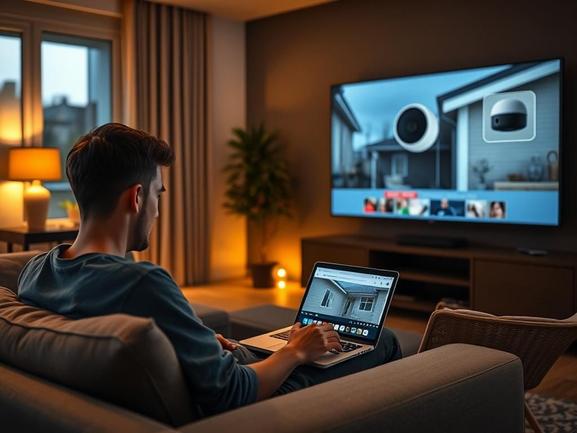
One significant stride forward is the planned enhancement of the Google Home web application. Historically, the web interface offered limited functionality, primarily serving as a setup or basic monitoring tool. The upcoming changes promise a much more robust experience, bringing core controls like adjusting lighting, setting thermostat temperatures, and even managing door locks directly to a web browser. This move is particularly impactful for users who spend significant time on desktop or laptop computers, offering a seamless way to interact with their home without needing to reach for their phone. It underscores Google’s recognition that smart home control should be accessible from wherever the user is, on whatever device is most convenient. The rollout is slated to begin within the Public Preview program, indicating a phased approach to gather feedback and refine the experience before a wider release. This expansion represents a crucial step in making the Google Home ecosystem truly multi-platform.
Another intriguing development involves the integration of Gemini, Google’s advanced AI model, into the broadcasting feature. The ability for an AI assistant to initiate broadcasts opens up fascinating possibilities. Imagine setting up intelligent reminders or receiving proactive notifications based on sensed conditions within your home – perhaps a broadcast alerting everyone when the garage door is left open for an extended period, or a gentle chime throughout the house when it’s time for dinner. This capability moves beyond simple voice commands initiating a user-defined message; it hints at a future where the smart home itself, guided by Gemini, can communicate important information autonomously. This could fundamentally change how we interact with and perceive our connected homes, making them more active participants in managing household logistics rather than passive recipients of commands. The potential for personalized and contextual broadcasts, driven by AI, adds a layer of sophistication to the smart home experience.
Entertainment spaces are also receiving attention, with a notable update coming to the Google TV Streamer’s Home Panel. Soon, users will benefit from picture-in-picture (PiP) support for Nest Cams. This means you can keep an eye on your front door or check on your backyard camera feed without interrupting your movie or show. This is a practical improvement addressing a common user need: simultaneous entertainment and security monitoring. Instead of pausing content or switching inputs, a discreet PiP window provides at-a-glance visibility. This feature, also debuting in Early Access via the Public Preview, highlights Google’s focus on integrating smart home functionalities into the entertainment hub. Furthermore, refinements to video history playback, including the convenient 10-second skip with a double-tap and smoother overall scrolling, enhance the usability of security camera footage review.
These diverse updates – expanding web control, AI-driven broadcasting, and enhanced TV integration – collectively paint a picture of Google’s strategic vision for the smart home. They emphasize accessibility across multiple device types, leverage the power of AI for more intelligent interactions, and integrate essential functionalities like security monitoring into popular entertainment platforms. The consistent use of the Public Preview program for initial rollouts also suggests a commitment to iterative development and user feedback incorporation. As the ecosystem matures, the convergence of AI like Gemini with a wider array of control points signifies a move towards a truly intelligent, responsive, and omnipresent smart home experience.
The smart home is no longer just about controlling devices; it’s increasingly about an ambient intelligence that understands context and communicates proactively.
This evolution promises greater convenience and deeper integration into the fabric of our daily lives.
In conclusion, the latest previews from Google Home point towards a future where managing your connected environment is more flexible, intuitive, and seamlessly integrated into your digital life, wherever you are. The expansion of web controls democratizes access, Gemini’s broadcasting capability adds an intelligent layer of proactive communication, and TV integration brings security monitoring into the entertainment sphere. These steps demonstrate Google’s ongoing commitment to building a comprehensive and intelligent smart home ecosystem. As we look ahead, the question remains: how far will AI push the boundaries of ambient intelligence, and how will our interaction with our homes continue to transform?