
Artificial intelligence is no longer confined to the realm of science fiction; it is rapidly integrating into countless facets of our lives, from streamlining business operations to powering sophisticated search engines and enabling groundbreaking scientific research. Its potential for positive transformation is undeniable, promising unprecedented levels of efficiency, innovation, and problem-solving capabilities. However, like any technology of this magnitude, AI possesses a significant, often overlooked, footprint – its voracious appetite for energy. As AI systems become increasingly complex and widespread, concerns are mounting regarding their escalating power demands, leading to some startling comparisons. One analysis suggests that by as early as 2025, the energy consumed by AI could potentially surpass that of Bitcoin mining, a process already notorious for its substantial environmental impact and electricity usage. This prediction throws a spotlight on the sustainability challenges inherent in the rapid advancement of AI and urges a critical examination of its future trajectory.
The analysis painting this concerning picture comes from a researcher with a history of scrutinizing the energy intensity of digital technologies. Employing a methodology described as “triangulation,” this expert synthesized information from various sources to arrive at their projection. This involved examining publicly available specifications of the hardware underpinning AI operations, incorporating estimates from industry analysts, and poring over company earnings calls to gauge production levels and deployment scales. A key piece of evidence supporting the accelerating trend is the reported surge in manufacturing capacity for specialized AI chips. A major fabricator, known for producing chips for leading AI companies, saw its ability to produce these critical components more than double in just a single year, between 2023 and 2024. This dramatic increase in hardware availability directly correlates with the potential for a significant leap in overall AI processing power and, consequently, energy consumption.
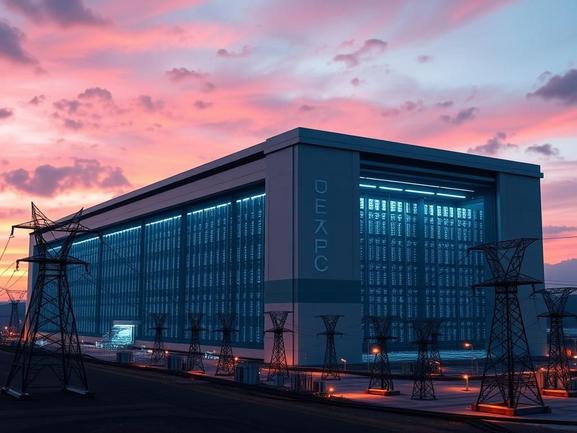
The implications of AI’s surging energy needs extend far beyond a simple comparison to cryptocurrency mining. The analysis suggests that AI could command a substantial portion – potentially close to half – of the global electricity consumed by data centers by the close of 2025. Data centers are the foundational infrastructure of the digital age, housing the servers and equipment that power the internet, cloud computing, and now, increasingly, AI workloads. Such a dramatic shift in power consumption within these facilities would place immense strain on existing energy grids. This projection aligns with broader forecasts, such as a recent report predicting a notable increase in electricity demand in the United States within the decade, attributed in large part to the combined growth of AI, traditional data centers, and yes, ongoing Bitcoin mining activities. The sheer computational scale required for training massive AI models, often involving trillions of parameters, and even running sophisticated inference tasks, inherently demands vast amounts of electrical power.
The Need for Immediate Scrutiny
The rapid pace at which AI capabilities and deployment are expanding underscores the urgency of this energy consumption issue. The doubling of specialized chip production capacity serves as a tangible indicator of how quickly the underlying infrastructure is scaling. This isn’t a problem for the distant future; it’s one that is accelerating rapidly and demands immediate and serious scrutiny from researchers, policymakers, industry leaders, and the public alike. Ignoring this trend risks exacerbating existing energy challenges, potentially leading to increased reliance on fossil fuels if renewable sources cannot keep pace with demand, thereby undermining climate goals. It compels us to consider the environmental cost of every leap forward in AI capability. Is the current trajectory sustainable? What are the unintended consequences of building an ever more intelligent digital world on an energy foundation that is struggling to keep up?
“The rapid increase in hardware production for AI is a clear signal that its energy demands are set to skyrocket. This warrants significant and immediate scrutiny.”
In conclusion, while the transformative potential of artificial intelligence is immense and exciting, we cannot afford to overlook its growing environmental footprint, particularly its escalating energy consumption. The projection that AI’s power usage could soon eclipse that of Bitcoin mining serves as a potent wake-up call. It highlights the critical need for innovation not only in AI algorithms and hardware efficiency but also in developing sustainable energy solutions capable of supporting this growth responsibly. The future of AI must be intertwined with the future of clean energy. Policymakers, researchers, and corporations must prioritize understanding, measuring, and mitigating the environmental impact of AI, ensuring that our pursuit of artificial intelligence benefits humanity without jeopardizing the health of our planet. The time for proactive planning and investment in sustainable AI infrastructure is now, before the projected energy demands become a full-blown global power crisis.