
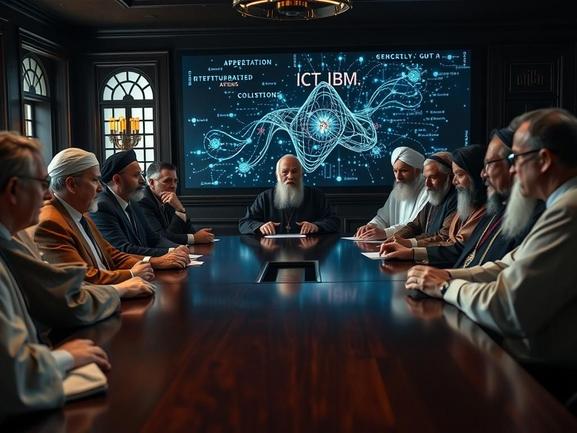
In an era defined by unprecedented technological acceleration, artificial intelligence (AI) stands as both a beacon of potential and a source of profound anxiety. As researchers push the boundaries of what machines can do, the conversation about AI’s future is broadening, extending beyond the tech labs and policy think tanks to include voices from unexpected corners. Recently, a significant group of religious leaders stepped into this complex dialogue, offering a unique blend of commendation and caution regarding the development and deployment of AI, particularly in the context of national strategy and political leadership. Their intervention highlights a growing recognition that the AI revolution is not merely a technical or economic challenge, but one with deep ethical, societal, and even spiritual dimensions. This engagement by faith leaders with figures like former President Trump underscores the critical need for a multi-faceted approach to navigating the AI frontier, one that integrates moral wisdom alongside technological ambition.
The context for this notable intervention is the escalating global competition in AI development. Nations are vying for leadership in this transformative field, recognizing its implications for economic prosperity, national security, and future power dynamics. Against this backdrop, a coalition comprising eighteen pastors and prominent faith leaders authored a letter, specifically addressing the efforts made under the Trump administration concerning AI. Their message wasn’t solely one of apprehension; it also contained praise, particularly acknowledging initiatives aimed at preparing the next generation for an AI-driven world. They specifically pointed to actions like executive orders focused on integrating AI education into classrooms, signaling an appreciation for proactive steps taken to equip American youth with relevant skills. This initial positive acknowledgment framed their subsequent, more urgent concerns, suggesting they see the pursuit of AI advancement as necessary, yet fraught with significant moral considerations.
However, the core of the faith leaders’ message was a stark warning about the potential downsides of unrestrained AI progress. They voiced serious concerns that the technology is advancing at a pace that could become uncontrollable, potentially leading to significant societal disruption and unforeseen dangers – a “potential peril” for humanity. Echoing anxieties expressed by influential figures within the tech industry itself, including pioneers like Elon Musk, Bill Gates, and Sam Altman, the religious leaders highlighted fears of widespread job displacement across numerous sectors. More ominously, they cautioned that an unchecked AI trajectory could eventually result in profound human suffering. This perspective aligns the concerns emanating from spiritual circles with those originating from the very heart of the tech world, emphasizing that the risks are palpable and acknowledged across diverse spheres.
Perhaps the most distinctive contribution of the faith leaders to the AI debate is their focus on its ethical and spiritual ramifications. They articulated that the prospect of creating artificial intelligence that might one day surpass human cognitive abilities raises “profound theological and ethical questions” that demand careful, considered reflection. Their letter posited that one need not subscribe to a particular faith to recognize the accumulated wisdom that religious traditions offer over centuries. They argued that virtually all major religious and ethical frameworks contain warnings against societal structures where human labor loses its intrinsic value or where life lacks essential guardrails and moral boundaries. This perspective introduces a vital, often overlooked, layer to the AI discussion – one that contemplates the intrinsic value of human work, dignity, and the necessity of moral constraints in wielding powerful new tools. This point resonates with recent pronouncements from other significant religious figures, including a notable address by a prominent Catholic leader, who also drew parallels between AI advancements and the disruptive force of the Industrial Revolution, urging a response focused on human dignity, labor, and societal cohesion.
Given these serious concerns, the faith leaders didn’t simply offer critique; they provided concrete recommendations for navigating the AI future responsibly. While urging the United States not to falter in the international “AI race,” they firmly stipulated that success must not come at “any cost.” This indicates a value-driven approach to national technological strategy. Their primary suggestion was the establishment of a dedicated advisory council or the delegation of authority to an existing body. Crucially, this proposed entity would be tasked with convening diverse leaders whose focus extends beyond merely exploring what AI *can* do, to thoughtfully considering what AI *should* do. This distinction is paramount, advocating for an ethical filter and a moral compass to guide AI development and deployment, ensuring that technological prowess serves human flourishing and societal well-being, rather than undermining it.
In conclusion, the engagement of religious leaders in the discourse surrounding artificial intelligence signifies a crucial expansion of the conversation. Their message to political leadership is a powerful reminder that the pursuit of technological advancement, while potentially beneficial, must be tempered with wisdom, foresight, and a deep respect for human dignity and societal stability. By raising alarms about potential perils and emphasizing the spiritual and ethical dimensions, they challenge society to look beyond the immediate economic and strategic advantages of AI. Their call for a body focused on what AI *should* do provides a clear actionable step towards embedding ethical considerations at the heart of AI governance. As AI continues to evolve, incorporating such diverse perspectives – drawing on centuries of accumulated human and moral wisdom – will be essential in ensuring that this powerful technology is steered towards outcomes that benefit all of humanity, rather than posing an existential threat.