
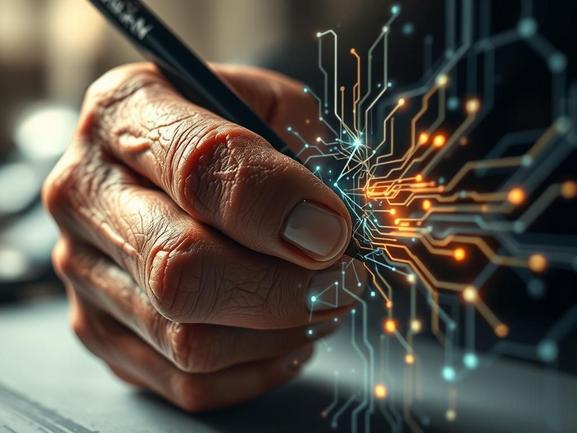
The encroaching shadow of artificial intelligence over human creative industries is no longer a theoretical discussion confined to academic papers or science fiction novels. It is a present reality, quietly, and sometimes brutally, reshaping the landscape of work for countless individuals whose livelihoods are rooted in creativity, craft, and unique human expression. Recent accounts from various sectors—from graphic design to voice acting—paint a vivid picture of a transition that is as rapid as it is unnerving, raising profound questions about the value of human skill, the ethics of algorithmic replication, and the very essence of what makes creative work resonate with an audience.
For those who have dedicated years to honing their artistic abilities, the arrival of sophisticated generative AI tools has often transitioned from a point of fascination to one of genuine existential dread. Initially encountered through impressive demonstrations of image generation or text synthesis, the sheer capability of these programs to mimic established styles or produce coherent outputs could be awe-inspiring. Yet, this initial wonder was quickly tempered by a chilling realization: if a machine could replicate the distinctive flair of a renowned artist or generate compelling visuals based on simple prompts, what then becomes of the human artist? This anxiety materialized starkly for one graphic designer, a veteran in their field, who witnessed their company enthusiastically embrace AI for various tasks, only to find their own irreplaceable role deemed redundant after six years of dedicated service. The swift, unceremonious nature of their dismissal underscores the brutal efficiency with which businesses can pivot to AI solutions, often overlooking the human capital they are discarding.
The impact of AI extends beyond the visual realm, permeating into the very fabric of audio and performance. The human voice, a deeply personal and expressive instrument, is now susceptible to algorithmic cloning. While companies may tout the speed and cost-effectiveness of using generative AI for voice work, this technological shortcut often comes at the expense of the nuanced performance, emotional depth, and unique personality that a human actor brings to a character. Consider the enduring legacy of voice actors like Kevin Conroy, whose portrayal of Batman was not merely reading lines but imbuing the character with a specific gravitas and vulnerability that resonated deeply with audiences. This level of human artistry is difficult, perhaps impossible, for AI to replicate authentically. Furthermore, the ethical implications of voice cloning are starkly highlighted by instances where an actor’s voice has been sampled, input into AI software, and used to generate new dialogue without their knowledge or consent. The unauthorized use and subsequent distribution of vocal likenesses for commercial purposes represent a significant breach of trust and intellectual property, revealing a disturbing frontier where personal identity can be appropriated by algorithms.
From a corporate perspective, the allure of generative AI is understandable. Its potential for automation, efficiency, and cost reduction aligns perfectly with business objectives focused on streamlining processes and maximizing output. The initial narrative often frames AI as a “tool” to augment human creativity, a collaborator to enhance productivity. However, the reality on the ground often appears different, with AI becoming a direct replacement rather than an assistant. The consequence is sometimes a tangible loss of quality, authenticity, or “soul” in the final product. The observation that an AI-generated company website felt devoid of genuine passion or substance, presenting mere facts without conveying a sense of enjoyment, speaks volumes. Creative work, at its best, is infused with human experience, perspective, and passion. When this human element is removed or diminished, the result can be sterile and unengaging, lacking the spark that connects with other humans on an emotional level. The drive for algorithmic efficiency risks creating a creative landscape that is technically proficient but emotionally barren.
The rapid pace of AI adoption and its discernible impact on employment inevitably fuels anxiety about the future, particularly for emerging generations considering careers in creative fields. If AI can write scripts, compose music, generate art, and replicate voices, what unique value proposition do young human creatives offer? This fear, though understandable, necessitates a deeper examination of what remains uniquely human in the creative process. Perhaps the future lies not in competing with AI on tasks it excels at (speed, pattern recognition, replication), but in doubling down on the qualities it lacks: original conceptual thinking, emotional intelligence, lived experience, critical judgment, collaboration, and the capacity for true innovation that stems from unique human perspective. The challenge for the next generation of creatives will be to navigate this evolving landscape, perhaps finding ways to collaborate with AI while fiercely protecting and leveraging their intrinsic human creativity and ethical integrity.
In conclusion, the anecdotes of job displacement and ethical breaches emerging from the front lines of creative industries serve as a potent reminder that the rise of AI is not without its human cost. While the technological advancements are undeniably impressive, we must critically assess their implementation, ensuring that the pursuit of efficiency does not erode the value of human skill, violate personal rights, or ultimately diminish the quality and authenticity of creative output. The conversation needs to shift from merely marveling at AI’s capabilities to addressing the urgent need for ethical guidelines, regulatory frameworks, and a societal commitment to valuing and preserving human creativity in an increasingly automated world. The echoes in the machine are getting louder, and it is imperative that we listen and respond thoughtfully.