
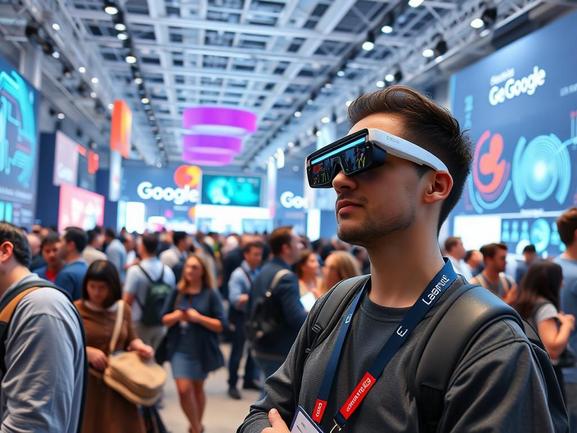
Google I/O is perennially marked as a significant event on the tech calendar, a moment when the veil is lifted on the company’s strategic direction and the innovations poised to shape our digital lives. The 2025 iteration proved to be no exception, serving as a powerful testament to Google’s unwavering commitment to advancing artificial intelligence and its integration across an ever-expanding suite of products and services. This year’s conference wasn’t merely about iterative updates; it signalled a fundamental shift, hinting at a future where AI isn’t just a feature, but the very fabric of the user experience. From foundational model enhancements to entirely new interaction paradigms, the announcements painted a vivid picture of Google’s vision, one where intelligence is ambient, assistance is ubiquitous, and creativity is democratized. As we sift through the key takeaways, it becomes clear that Google isn’t just building tools; they are actively constructing the architecture for tomorrow’s digital landscape, raising fascinating questions about accessibility, privacy, and the very definition of productivity and creativity in the age of advanced AI.
At the heart of Google’s I/O 2025 narrative was undoubtedly the evolution of its Gemini models. The focus on Gemini 2.5 highlighted significant strides in raw capability and efficiency. Reports suggest substantial improvements across critical dimensions, including enhanced reasoning abilities, more sophisticated handling of multimodal inputs, and considerable gains in coding proficiency. Perhaps most notably, the claim of requiring 20% to 30% fewer tokens for certain tasks points towards a more computationally efficient future for large language models, a crucial factor for scaling these powerful systems. Beyond the technical specifications, the ambition articulated was to position Gemini as a truly ‘universal AI assistant’. This isn’t just about having an AI chatbot; it’s about embedding intelligent assistance contextually across diverse workflows and touchpoints, from drafting emails to navigating complex information. The vision implies an AI that understands your needs across different applications and provides proactive, intelligent support, a concept that holds immense potential for boosting individual productivity but also prompts contemplation on the nature of human-computer interaction and the potential for over-reliance on AI in decision-making processes. The pursuit of a ‘universal’ assistant model underscores Google’s long-term strategy to make AI an indispensable part of every user’s digital footprint, raising the stakes in the competitive AI landscape.
While the advancements in Gemini promise exciting capabilities, the introduction of Google AI Ultra as a subscription service signals a potentially significant shift in how these cutting-edge AI features will be accessed. This move suggests a tiered approach to AI, where the most advanced capabilities might be gated behind a paywall. On one hand, a subscription model can provide a sustainable revenue stream to fund the substantial research and development costs associated with pushing the boundaries of AI. It can also offer users who require the absolute best performance and features a dedicated, premium experience. However, it also raises questions about equitable access to the most powerful AI tools. Will a subscription model create a digital divide, where those who can afford it gain a significant advantage in terms of productivity, creativity, and access to information?
“Democratizing AI has been a common refrain, but the reality of funding advanced research may necessitate models that challenge this ideal, prompting a re-evaluation of what ‘accessible AI’ truly means.”
The balance between innovation funding and broad accessibility is a critical challenge facing the industry, and Google AI Ultra will be a key case study in how this tension plays out. Understanding the specific features exclusive to the Ultra tier will be crucial in assessing the impact of this service on the broader user base and the competitive landscape.
The creative landscape is also set for a significant transformation with the unveiling of tools like Veo, Imagen, and Flow. These initiatives underscore Google’s focus on leveraging generative AI to empower creators across various mediums. Veo, likely focused on video generation, Imagen on image creation (building on existing capabilities), and Flow (potentially related to audio or other sequential data) represent powerful additions to the creative toolkit. These tools could dramatically lower the barrier to entry for content creation, allowing individuals and small teams to produce high-quality multimedia content more efficiently. Beyond creative output, Google is fundamentally rethinking the way we interact with information through Google Search. The integration of Project Astra’s multimodal capabilities means search is no longer confined to text queries. Users can now leverage their device’s camera to ask questions about the world around them, making search more intuitive and context-aware. The new AI Mode shopping experience further exemplifies this shift, offering personalized assistance from finding inspiration to visualizing purchases, moving beyond simple product listings to an interactive, AI-guided journey. These changes signal a move towards a more conversational, visual, and personalized search experience, blurring the lines between searching for information and receiving intelligent assistance.
Beyond creative pursuits and search, Google I/O 2025 also highlighted advancements aimed at refining how we communicate and collaborate. The mention of new Gmail AI tools suggests a continued effort to make email management more intelligent and less time-consuming. Potential features could range from advanced drafting assistance and smart replies to automated summarization of long threads and intelligent prioritization of incoming messages. These tools aim to combat email fatigue and enhance productivity within one of the most ubiquitous communication platforms. Furthermore, the evolution of Project Starline into Google Beam indicates progress in Google’s ambitious telepresence technology. This initiative seeks to create more immersive and realistic virtual communication experiences, potentially transforming remote work, virtual meetings, and long-distance interactions. By leveraging advanced display and imaging technologies, Google Beam aims to make virtual conversations feel more like in-person interactions, reducing the cognitive load associated with traditional video calls. These developments in Gmail and Beam reflect a broader trend towards using AI and advanced hardware to make digital communication more efficient, intuitive, and human-like, bridging the gap between physical and virtual presence.
Finally, Google I/O 2025 provided our first substantial look at Android XR and its implications for smart glasses. This announcement confirms Google’s strategic intent to play a significant role in the emerging spatial computing paradigm. Android XR is positioned as the operating system for the next generation of immersive devices, providing a foundation for developers to build augmented and virtual reality experiences. The focus on smart glasses suggests a belief that a more socially acceptable and wearable form factor will be key to mainstream adoption of XR technology. While specific device details might still be under wraps, the introduction of a dedicated operating system signals a mature approach to building an ecosystem. This has profound implications for how we will interact with technology and information in the future, potentially moving computing off screens and into our direct line of sight. The development of a robust Android XR platform is critical for fostering innovation in this space, from gaming and entertainment to productivity and communication. The success of Android XR will hinge on developer adoption and the creation of compelling use cases that demonstrate the practical value of computing in an immersive overlay on the physical world, pushing the boundaries of mobile computing as we know it.
In summation, Google I/O 2025 wasn’t just an exhibition of new features; it was a declaration of intent. The pervasive integration of AI, from enhancing foundational models to powering creative tools, transforming search, and refining communication, paints a clear picture of Google’s future direction. The introduction of Android XR and the focus on smart glasses signal a significant commitment to the next wave of computing platforms. While the advancements are undeniably impressive, particularly the leaps in Gemini’s capabilities and the innovative approaches to search and creativity, they also bring to the forefront important considerations regarding the accessibility of cutting-edge AI, the future of privacy in a multimodal world, and the societal impact of increasingly powerful AI assistants. As these technologies mature and become more deeply embedded in our daily lives, the conversations around their ethical deployment, equitable access, and long-term consequences will become ever more critical. Google I/O 2025 left us with a compelling glimpse into a future sculpted by AI, prompting us to ponder not just what technology *can* do, but what kind of future we *want* to build with it. How will these innovations reshape our relationship with technology, with information, and with each other?